Guide
Declaring your cleaner retroactively: an honest playbook

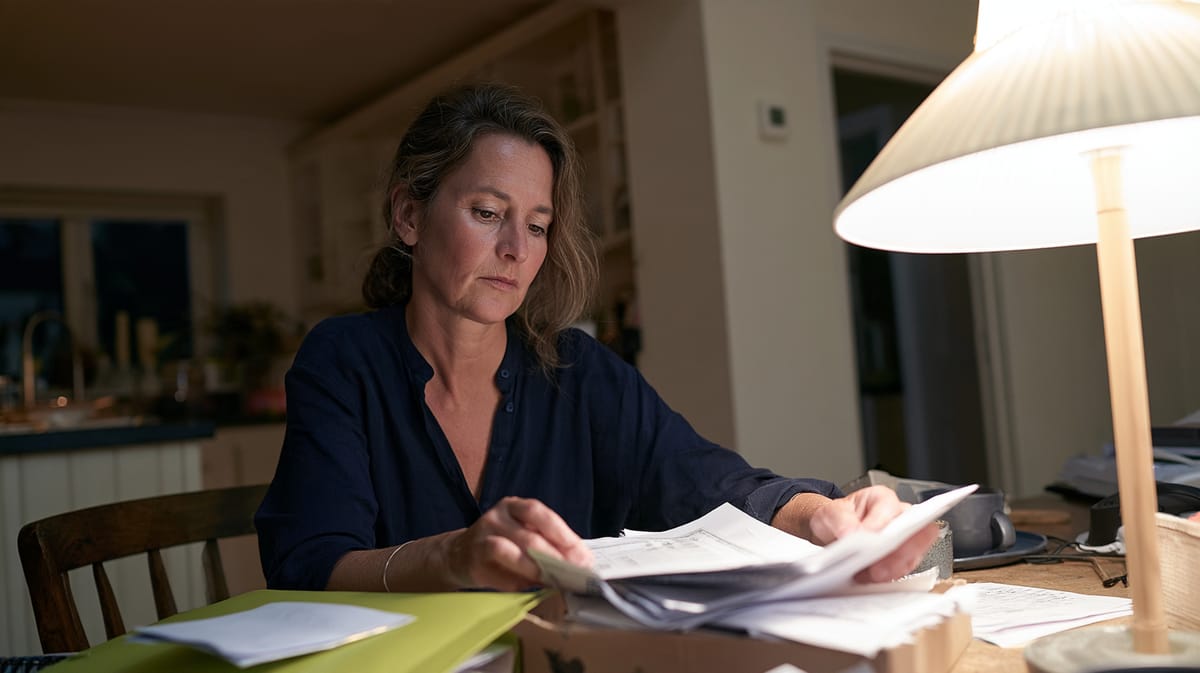
You've paid your cleaner in cash for years and now want to put it right. Here are the numbers, the steps and the words for it.
Would you rather just be correct from today onwards without dealing with the last 5 years? The calm route from today (no voluntary disclosure) →
Yes, you can register retroactively - and it is almost always the right call. If you report yourself to the compensation office, you pay the missed contributions (usually up to 5 years, AHVG Art. 16) plus late interest. Criminal proceedings are not ruled out, but the law mitigates any penalty for people who come forward (StGB Art. 48). Wait until it surfaces on its own and a fine comes on top. The earlier you report, the cheaper it gets.
This applies when
For households that have employed their help without AHV registration so far.
Official sources
And clean from now on: Register your cleaner in 5 minutes: with Clino
What does the back payment cost?
Voluntary filing, calculated year by year.
As a rule 5 years at most (AHVG Art. 16). Anything older is time-barred.
Total back payment
CHF 4'672
of which the employee's share: CHF 1'843. Many employers cover it: she already received her wage in cash.
If an inspection uncovers it, criminal proceedings come on top: not registering is an offence, with a monetary penalty of up to 180 daily units (AHVG Art. 87). After a conviction the office also adds a 50 % surcharge on the contributions (AHVG Art. 14bis).
The compensation office settles the back payment. From today it runs clean: registration and a payslip every month, prepared.
Register correctly from today →Estimate. The compensation office bills your real annual wages; accident premiums are charged by the insurer or the substitute fund.
You're not the first person to dread this conversation
Estimates suggest over 150,000 household employees in Switzerland work without being declared to a compensation office. That's not 150,000 bad people. That's 150,000 employers who at some point thought it was too complicated or too expensive, and eventually the conversation felt harder than starting it in the first place.
This text is for you. No moralising, no scare tactics. Just: what it costs, how long the statute of limitations runs, which steps actually work, and how to talk to your cleaner without losing her.
The 5-year rule: AHVG Art. 16

The compensation office can usually claim back AHV contributions for 5 years. It's written in Article 16 paragraph 1 AHVG. If the claim stems from an offence (failing to register, AHVG Art. 87), the longer criminal-law period applies: 7 years (StGB Art. 97). Anything older is time-barred - you cannot (and should not) pay it.
Important: the 5 years count from the end of the calendar year in which wages were paid. Declaring in 2026 covers 2021 through 2025. This applies even if your cleaner has worked for you for 10 years: as a rule only the last 5 are relevant, up to 7 after an offence.
AHVG Art. 16 para. 1: "If contributions are not claimed by way of a decree within five years of the end of the calendar year for which they are owed, they can no longer be demanded or paid."
Is there a formal AHV voluntary disclosure?
Short answer: not as formal as in tax law. There's no "AHV self-denunciation" form. But: employers who voluntarily report before a check or complaint arrives avoid, in practice, the criminal provisions under AHVG Art. 87 (misdemeanour) and usually also a BGSA complaint.
In concrete terms: you pay the contributions, plus late interest (~5% p.a.). That is not a guarantee: evading contributions remains an offence under AHVG Art. 87, but if you come forward and pay up, the law mitigates any penalty (StGB Art. 48). There is no fixed small fine for people who come forward; the administrative fine of up to CHF 1,000 (AHVG Art. 91) is for breaching procedural rules after a reminder, such as missed deadlines.
An important nuance
The compensation office has discretion. A cooperative employer who proactively provides all data is treated significantly more leniently than someone caught in a labour-market inspection. A short call to your cantonal compensation office BEFORE filing clarifies the tone - the conversation stays confidential, even if you ultimately don't file.
Catching up the registration, also retroactively
Maria
online
Hi Maria, I'm now putting our registration in order, including retroactively for the past months. This brings you no disadvantage, quite the opposite: that time counts towards your OASI pension. I'll take care of everything.
09:15That's reassuring, thank you! Do I need to do anything?
09:30Just your OASI number and address, I'll sort the rest with the compensation office. Thank you for your trust.
09:336 steps to legality
The following is the workflow Swiss tax advisors recommend to their clients. Expect 2 to 6 weeks from step 1 to step 6.
Step 1: Calculate the back-payment
Use the calculator above. Note the monthly wage, number of years, canton. AHV contributions, ALV, FAK, UVG and late interest make up the back-payment. That's the number you need before speaking to anyone.
Step 2: Talk to your cleaner - BEFORE filing
This is the hardest and most important step. She's entering the social-insurance system. That's good. But if she's undocumented or afraid of the step, she needs the chance to plan it with you. Never file behind her back. Scripts follow below.
Step 3: Call the cantonal compensation office
Every canton has its own compensation office (ZH: SVA Zuerich, BE: AKB, etc.). Explain the situation on the phone, ask about the retroactive-filing procedure. In 95% of cases the tone is matter-of-fact and helpful, not punitive.
Step 4: Submit annual wage reports for each affected year
The compensation office will give you the form "Meldung von massgebenden Loehnen" for each year retroactively. One form per year: employee name, AHV number (if available), total annual wage paid. The office calculates, issues a decree with invoice.
Step 5: Sort out the year-end documents for her taxes
In the ordinary procedure you issue a Lohnausweis (form 11) for every year. Not in the simplified procedure: there the compensation office sends your cleaner a confirmation of the withholding tax deduction. She uses these documents for her own tax return - some will need to re-declare. That's her business, but she needs the documents.
Step 6: Set up ongoing payroll
From now on, monthly or quarterly: payslip, AHV contributions under the simplified procedure (possible up to CHF 22,680/year per employee, max. CHF 60,480/year total payroll), accident insurance (no year-end wage statement needed: the compensation office sends her a confirmation of the withholding tax deduction). Either DIY or through a service like Clino.
A nanny or carer instead of a cleaner? What comes on top
The 5-year rule and the six steps apply just the same. With a nanny or carer, though, wages are usually higher, and three points come on top that rarely matter for a few hours of cleaning:
Pension fund (BVG)
If her annual wage was above the BVG threshold (2026: CHF 22,680), she was usually subject to the mandatory occupational pension. Back-registering with AHV does not cover this: you also register her retroactively with a pension fund, for example the Substitute Occupational Benefit Institution. That is possible, but it can cost more than a timely affiliation. If she has already left the job, only a forced affiliation remains.
Withholding tax
If she has neither a C permit nor a Swiss passport, you should have deducted withholding tax. As the employer you are liable for it (Art. 88 DBG), retroactively too. So report those years to the cantonal tax office as well, not only to the compensation office.
Live-in: board and lodging count
If she lives and eats with you, board and lodging are part of the AHV wage: CHF 990 a month. Include that amount in every annual report, even if you never paid anything out for it. That puts a live-in almost always above the BVG threshold.
How to stay compliant from now on: registering a nanny and employing a carer.
What you must NOT do
1. State a false start date
The temptation is real: "She's only been working for me for 6 months." That's forgery of documents (StGB Art. 251) and the compensation office cross-checks with tax returns, bank records and neighbour interviews when suspicious. The risk is enormous, the upside small.
2. Pressure your cleaner
"Either you accept lower net now, or I fire you" is not only humanly awful, it can be construed as coercion (StGB Art. 181). Fair solutions: you cover the retroactive employee contributions (total ~6.4%), or split them.
3. Fire her to cover your tracks
Firing to avoid back-payment is legally murky and morally bad. Besides: she retains the right to retroactive declaration even if she no longer works for you. And if she goes to the compensation office herself, you get the worst outcome.
4. Hope it'll blow over
Labour-market inspections by SECO and cantonal authorities have risen in recent years, especially in Romandy and Ticino. Anonymous complaints - often from frustrated neighbours or after relationship breakups - are common. If you're already thinking about it, you probably need to act.
What your cleaner loses if you DON'T file retroactively
Often forgotten: this isn't just about your fines. For the woman who's been cleaning for you for years, every undeclared year is real:
- ✓AHV contribution years - Every year counts for her later pension. A missing year means roughly CHF 60/month less pension, for life.
- ✓Maternity insurance - Without AHV registration, no entitlement to 14 weeks of maternity leave at 80% salary.
- ✓UVG accident cover - After a work accident the Ersatzkasse UVG steps in, but she first has to prove she worked for you. You get billed substitute premiums up to 5 years back.
- ✓Unemployment benefits - Without a reported wage she has to prove the work and the wage herself, otherwise no daily allowance if dismissed or job lost.
When she won't play along: two scripts
Many cleaners are scared: of taxes, of the migration office, of losing flexibility. Legitimate fears that deserve to be taken seriously. Two proven conversation starters:
Script 1: "I want to do this for you"
"Maria, I want to talk to you about something I've been thinking about. We never declared your wage. I want to fix that now - for you. It means you're earning AHV pension years, you're properly covered if there's an accident, you're working officially. I'll cover the contributions owed. Your net stays the same. But I need your agreement, and we have to write to the compensation office together."
Script 2: When she's afraid of taxes
"I know you're worried about taxes. Fair. But at your wage level, amounts are usually small because the simplified procedure withholds only a flat 5% - and deductions are low. If you want, I'll come with you to the first appointment at the compensation office or for your tax return. We do this together."
If your cleaner has no valid residence permit
This case is complex; what works and what does not is covered in our guide to registering undocumented workers. Compensation offices don't automatically report to the migration authority - AHV declaration and residence status are legally separate. But: declaring makes the work visible. In practice: talk to specialised counselling services BEFORE acting. They know the situation in your canton and can show you the safest path.
Frequently asked questions
Will I be punished if I file retroactively?
In practice: rarely or never with serious penalties. Voluntary filings are handled cooperatively by compensation offices - you pay the contributions plus late interest (~5% p.a.). There is no fixed fine for people who come forward. Criminal proceedings under AHVG Art. 87 (a monetary penalty of up to 180 daily units) typically hit employers caught in an inspection.
How many years must I declare retroactively?
As a rule 5 years, up to 7 after an offence (AHVG Art. 87; AHVG Art. 16 para. 1, StGB Art. 97). If your cleaner has worked longer for you, older years are time-barred and won't be demanded. So as a rule, declare the last 5 calendar years.
Does my cleaner have to agree before I file?
Legally, no - as employer you may fulfil your statutory duty. Humanly and practically, yes. Otherwise you jeopardise the relationship, her tax planning and possibly her residence status. Talk to her first, then to the compensation office.
Can the compensation office check my bank or tax return?
Not automatically. But on reasonable suspicion of undeclared work, the office can request administrative assistance - especially from the tax authority. Regular cash withdrawals of CHF 800-1,500 from ATMs in the same area can be a signal. That's why voluntary disclosure is the cleaner option.
Can I call the compensation office anonymously to ask?
Yes. Every cantonal compensation office answers general questions by phone without recording your personal data. You can describe the scenario, ask about the procedure, and decide later whether to file. These calls are not logged.
How much does retroactive declaration actually cost me?
For a cleaner earning CHF 800/month over 3 years (total CHF 28,800 wages): AHV/ALV/FAK/UVG ~CHF 4,600 (both shares) + admin + late interest ~CHF 400 = around CHF 5,000. Use the calculator above for your specific situation.
Does all this apply to a nanny or carer too?
Yes: the same 5-year rule (AHVG Art. 16) and the same steps. With higher wages the pension fund usually comes on top (above the BVG threshold, 2026: CHF 22,680), and without a C permit also withholding tax, for which you are liable. For a live-in, board and lodging count as wages at CHF 990 a month.
Sources and legal basis
- AHVG Art. 16 - Statute of limitations on contribution claims: fedlex.admin.ch
- AHVG Art. 87/88 - Criminal provisions for contribution evasion: fedlex.admin.ch
- BGSA - Federal Act against Undeclared Work: fedlex.admin.ch
- SECO - Information sheet on undeclared work: seco.admin.ch
Note: This guide provides general orientation and does not replace legal advice in individual cases. Depending on your canton, your employee's residence status and the actual wage level, different rules may apply. For binding information contact your cantonal compensation office or a tax advisor.
Last updated: 5 October 2026