Working as a caregiver in Switzerland: pay, rights, canton and first steps
Want to support older people at home and earn a living doing it? This is a real profession with fair pay and clear rights. Here's what's realistic, what you need, which canton is worth it, and how to get started step by step without slipping into undeclared work.
As a caregiver in a private household you are a regular employee: you earn at least around CHF 20.35 an hour, you're entitled to holidays, sick pay and insurance. Language, wage and cost of living differ a lot by canton, and care is not nursing.
- Minimum wage around CHF 20.35/h, about CHF 3'700 gross a month full-time (42 h); live-in caregivers typically earn CHF 3'500 to 5'500 cash plus board and lodging. With experience and a certificate you negotiate more.
- Wage, language and living costs vary by canton - compare before you decide.
- Care means accompanying, not nursing: medical acts stay with Spitex.
Clino is not a job agency
We don't post jobs, hire anyone or arrange visas. This guide shows you the right path, pick your situation:
Before you start: what to know
- 1As an employee in a private household you're protected: contract, payslip, social insurance and accident cover. That's exactly what separates a real job from undeclared work and makes holidays and sick pay enforceable in the first place.
- 2In live-in roles, not every hour of presence counts automatically as paid working time - there are rules on working hours, rest and on-call. Clarify this in the contract before you say yes.
- 3Experience plus a recognised certificate builds families' trust - and is your strongest argument for negotiating above the minimum wage. Clino's senior-care course is free.
- 4To start you need the right to work in Switzerland, a written contract and a proper payslip. Clino prepares the registration and social insurance for you - so you're legal and insured from day one.
What does a caregiver earn in Switzerland?
There's no fixed rate in senior care either. The floor is the cantonal standard employment contract (NAV) for household work, which covers care and household tasks in private homes.
Pay depends on experience and qualification. In live-in care, presence and rest times count too - have your working hours clearly stated in the contract.
CHF 20.35
no qualification
CHF 22.30
with 4+ years' experience or an EBA
CHF 24.55
with an EFZ or 3-year apprenticeship
Board and lodging may be partly counted toward your wage in live-in roles, but only within set limits. Always insist on a proper payslip - it protects you.
What a proper payslip looks like
Every month, in writing. The deductions are not a loss - each line buys you something. Follow the numbers:
Maria Gonzalez, caregiver
- 1
Check this against the hours you actually worked. Keep your own record.
- 2
Your 4 weeks of holiday, paid out with every payslip on hourly pay instead of later.
- 3
The basis for everything below - and the number that belongs in your contract.
- 4
Your pension. Your employer pays the same amount again on top, you are not carrying it alone.
- 5
Unemployment insurance: daily benefit if the job disappears.
- 6
Accident cover for your free time. Accidents at work are paid by your employer, from hour one.
- 7
In the simplified procedure this settles your tax. No tax return for this income.
- 8
What lands in your account. Cash with no payslip is a warning sign.
No AHV line means you are not registered
Then it is undeclared work, however kindly it is meant. Without registration you have no accident cover, no pension credit, no unemployment benefit and no proof you ever worked.
Example: 20 h/week at CHF 22.30/h in Zurich, simplified procedure (wages up to CHF 22'680/year). In the ordinary procedure BVG is added and tax is assessed normally.
Get your employer to register you legally
Share your personal link. When your employer signs up through Clino you earn CHF 10, plus another CHF 20 once they're active. And you become legally employed and insured.
What decides isn't where you live - it's your passport
Many read this guide from outside Switzerland - often from Latin America. But whether you may work isn't decided by your address: it's the country of your passport. The rule is simple: with an EU/EFTA passport you may work; with any other you already need a permit. Pick the country of your passport.
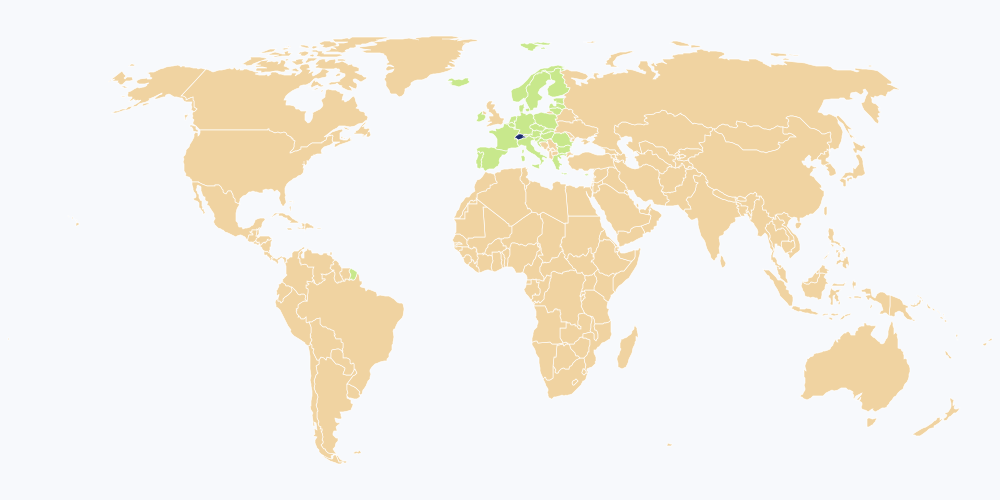
 Switzerland
EU/EFTA passport – you may work
Other passport – permit needed
Pick the country of your passport
Tap the country of your passport (or 'other') to see what applies to you: permit and pay gap.
Which canton is worth it? Language, pay and living costs
Three things decide where caregiving pays off for you: the language (you work in the family's language), the average wage and the cost of living. Filter below by language region and sort by what matters to you.
Map of Switzerland: pay & living costs
Avg gross wage CHF/h

Canton finder: language, pay & cost of living
Compare language, average wage and cost of living. Filter by language and sort by what matters to you.
Language region
Sort by
Avg wage = estimated gross hourly wage in private households (BFS). Cost of living and the wage/cost score are a rough orientation (rent + price level). Job availability and the actual rent in your town can change the picture.
Important: a high wage in Geneva or Zurich often goes straight to rent. In cantons like Valais, Jura or Solothurn you earn a little less, but rent and health insurance are lower - so more can be left at the end of the month.
You don't just keep an eye on someone - you give a person safety and dignity in daily life. Carry yourself that way, and get paid that way.
Your rights as an employed caregiver
As soon as you provide care regularly in a household, you are an employee under the Code of Obligations. These rights apply regardless of hours - including live-in:
Clear hours & contract
Especially live-in, it must be clear when you work, take breaks and have time off.
4 weeks' holiday (5 under 20)
At least 4 weeks of paid holiday per year, pro rata for part-time.
Pay when sick
If you fall ill, your pay continues - depending on years of service (e.g. the Bernese scale).
Insured from hour one
Your family must insure you against work accidents (UVG) and pay AHV.
Live-in: which hours get paid?
Being in the house is not the same as being off. Three categories, three rules:
Paid in full at the agreed hourly rate.
You have to be there and able to step in. It must be compensated - a lower agreed rate is possible, zero is not.
Unpaid, but then it has to be genuinely free: no being on call, no interruptions.
If your night is interrupted regularly, it is no longer rest time. That is exactly what Swiss court cases on 24-hour care turned on: unpaid stand-by was reclassified as working time after the fact. Put in the contract which hours fall into which category.
Board and lodging: the official rates
CHF 3.50
Breakfast
CHF 10.-
Lunch
CHF 8.-
Dinner
CHF 11.50
Lodging
CHF 33.-
per day
These are the AHV rates: CHF 990/month for full board and lodging. They are added to your cash wage for AHV purposes - and can be counted toward the minimum wage at these amounts at most. A room does not replace your pay.
What's realistic - and what's not?
Honestly: caregiving is a good way in, but it's not a goldmine and not a shortcut to becoming a nurse. Here's what it really looks like:
Not really
- •Working as a qualified nurse right away - medical care needs training.
- •Landing most jobs with no German, French or Italian.
- •Getting a work permit easily as a non-EU/EFTA citizen.
- •Getting rich on 24/7 live-in - rest periods are mandatory and being present isn't the same as working.
Realistic
- •Starting as a career changer - many families want heart and reliability, not just diplomas.
- •Negotiating above the minimum with experience and a certificate.
- •Part-time, by the hour or live-in - you choose the model that fits you.
- •Building regular clients and referrals over time.
Introducing yourself as a carer
Brauchli
online
Hello Mrs Brauchli, I heard you're looking for someone. I've been caring for elderly people for six years: walks, cooking and help around the house, with patience and warmth. I'm available in the mornings. May I introduce myself?
10:20Hello, yes, gladly. It's for my mother (82). When would you be free?
10:42I'd be very glad to. Wednesday afternoon would suit me, and I'd get to meet your mother too. See you then!
10:45Your first steps as a caregiver
You don't need to know everything at once. These four steps take you from 'I want to help' to 'I work as a professional, fairly employed caregiver'.
What you need to start
Clarify your requirements
Permit, language and a first-aid course are the basics. A certificate helps you stand out.
Make yourself visible
Through platforms, the Spitex network, notice boards or referrals. Be clear about what you offer: hours, live-in or not, your languages.
Agree pay, hours and boundaries
Put the hourly wage, working and rest times, holidays and notice period in writing - and what is and isn't part of your tasks.
Get registered correctly
The family registers you with the compensation office and insures you. Only then are you truly protected.
Insist on proper registration
Before you say yes: warning signs
Most families mean well. You still turn these offers down, or renegotiate them first.
Never work cash-in-hand
Undeclared cash costs you AHV pension, accident insurance and unemployment cover and both sides risk back-payments. Insist on being declared.
24h care: stand-by time must be paid
Live-in roles have seen court cases over unpaid night/on-call time. Pick agencies that pay stand-by and respect the NAV/GAV wage.
A real agency never charges YOU
Placement and temp agencies are paid by the employer. If an 'agency' asks you for money for a job or permit, walk away, it's illegal.
Beware 'permit brokers'
No one can 'arrange' a permit for a cleaner/carer from abroad for a normal family. Never pay for it; verify everything on sem.admin.ch.
On platform leads, the family declares you
You're only insured if the household actually registers you (AHV from the first franc). Ask them to do it via Clino.
Get everything in writing, keep your own record of hours, and insist on being registered. Anyone who refuses has a reason. Your rights in a household job.
Senior Care
Dignified care at home: safety, dementia knowledge and your boundaries.
- ~45 min
- in your language
- PDF certificate with QR code
What makes a professional caregiver
Families trust you with a loved one. Those who combine safety and dignity get recommended and paid better:
Fall prevention
Falls are the most common danger - you spot risks and defuse them.
Spotting emergencies
Recognize a stroke early (FAST) and react correctly.
Understanding dementia
Accompany people with dementia calmly and with dignity.
Role & boundaries
Know what you may do - and when Spitex takes over.
The emergency cheat sheet
Two things worth knowing by heart. Take a screenshot.
Spotting a stroke: FAST
- F
Face
One side of the face droops (ask them to smile)
- A
Arms
One arm cannot be raised
- S
Speech
Slurred speech, confused words
- T
Time
Call 144 immediately, every minute counts
On the phone, in this order: where, what, how many, what condition, who is calling. Then do not hang up until the call centre says so.
Save these numbers now
- 144
Ambulance - emergency, injury, stroke, heart attack
- 145
Tox Info Centre - poisoning, e.g. medication taken incorrectly
- 117
Police
- 118
Fire brigade
- 143
Die Dargebotene Hand - listening and support helpline, 24/7
Your list should also include: the numbers of the family, Spitex and the family doctor.
The full module in the free courseCare is not nursing - and why that matters
You may support daily life: companionship, household, accompanying, reminding about medication. Nursing acts (wounds, injections, administering medication) belong to Spitex or qualified professionals.
Am I allowed to do this? Your tasks at a glance
The question every carer asks on day one. These three columns answer it.
This is your job
Care - you may do this without training
- Keeping company, listening, talking, reading aloud
- Cooking, household, shopping, laundry
- Walks and accompanying to appointments
- Reminding about medication and putting out the prepared box
- Helping with dressing and washing
- Watching for trip hazards and safety
- Noting down how the day went
Only once you've been shown
Grey zone - put in writing who instructs you
- Repositioning, lifting, transfers to the bathroom
- Putting on compression stockings
- Measuring blood pressure or blood sugar
- Intimate hygiene and incontinence care
- Movement exercises set by a physiotherapist
Never without training
Nursing - this belongs to Spitex or qualified staff
- Treating and dressing wounds
- Giving injections, insulin included
- Administering medication rather than reminding
- Changing a dose or skipping medication
- Catheters, stoma, feeding tubes
The grey zone is not a no - but have the Spitex or the doctor show you, and write into the contract what it covers. When in doubt: ask, document, refer to Spitex.
This boundary protects you too
Correct employment protects you: only then are you insured and build AHV for your pension. Clino prepares the contract, pay and registration for the family for a flat CHF 19.90 a month.
Frequently asked questions
Do I need nursing training?
What's special about live-in care?
May I give medication?
Do I have to pay AHV and taxes?
Is a certificate worth it?
Can I work as a caregiver without an EU passport?
Do I have to speak the family's language?
Can I work as a caregiver in Switzerland if I don't hold an EU/EFTA passport?
Related guides
Become a professional caregiver - free
Learn safety, dementia knowledge and your boundaries in 6 short modules. At the end you'll be holding your certificate.
Get employed legally, without the awkward conversation
We prepare your personal employment pack and send it to your employer in their language. Free.
+ CHF 50 for you when they register you
Create your pack (2 min)