Starting as a Cleaner in Switzerland - Your Complete Guide
Whether you're switching careers, looking for a side job, or making a fresh start - here you'll find everything you need to get going as a household cleaner. From equipment and paperwork to finding your first clients: step by step, no jargon.
Start out as an employee of private households: your employer registers you with AHV and accident insurance, and the NAV guarantees you at least CHF 20.35 gross per hour.
- NAV minimum wage: CHF 20.35-24.55/hour; market rates are CHF 25-38 depending on region
- Always insist on a written contract and proof of registration from your employer
- Basic own kit from CHF 50-100; find clients via word of mouth, ads and flyers
Clino is not a job agency
We don't post jobs, hire anyone or arrange visas. This guide shows you the right path, pick your situation:
Starter Checklist: Are You Ready?
Before you begin, use our interactive checklist to see if you meet all the requirements. Don't worry - most items can be sorted out quickly.
Starter Kit Check
Are you ready to start working as a cleaner?
Quick start in 6 steps
If you want to start today, follow this low-stress order: set up your basics first, then build clients.
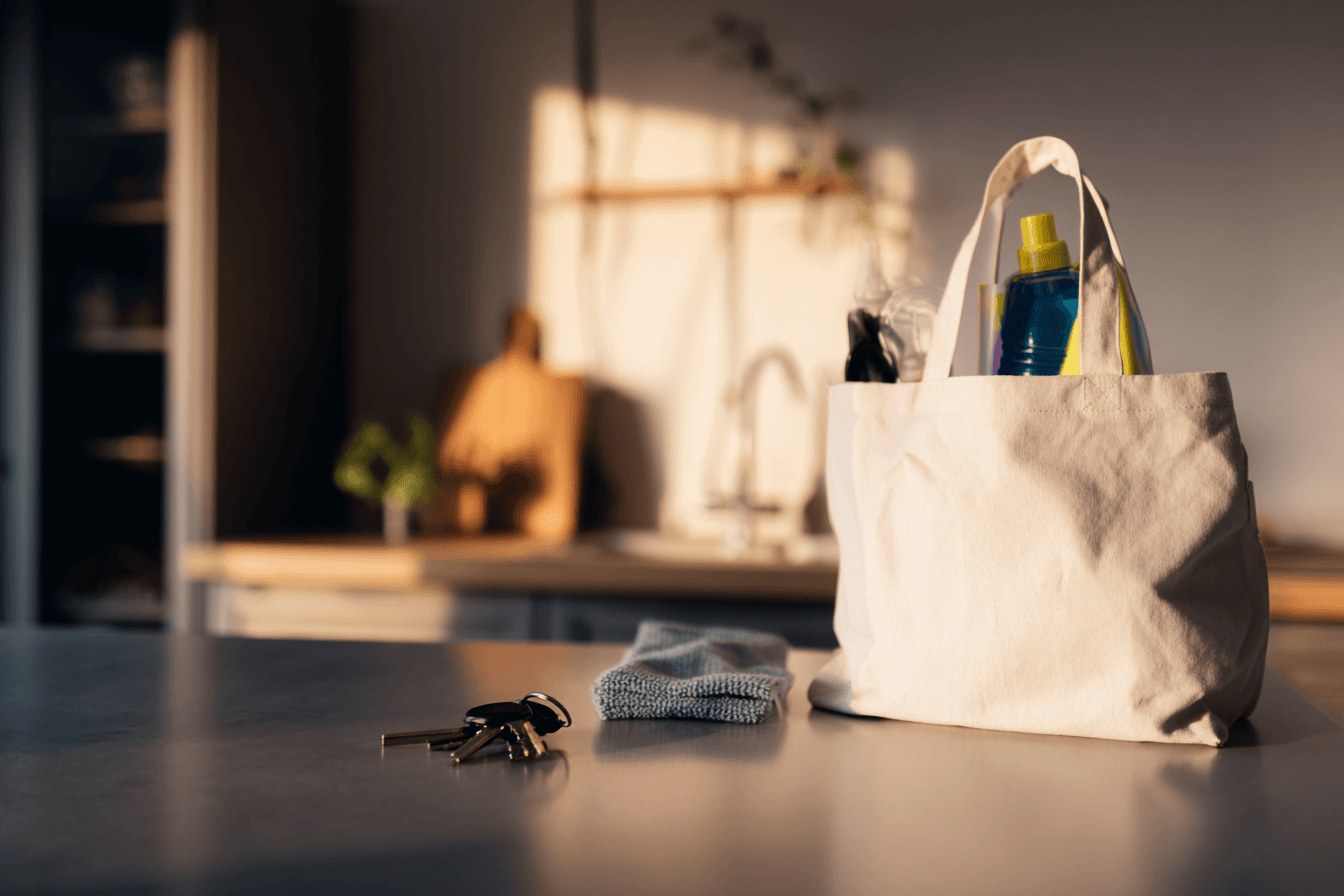
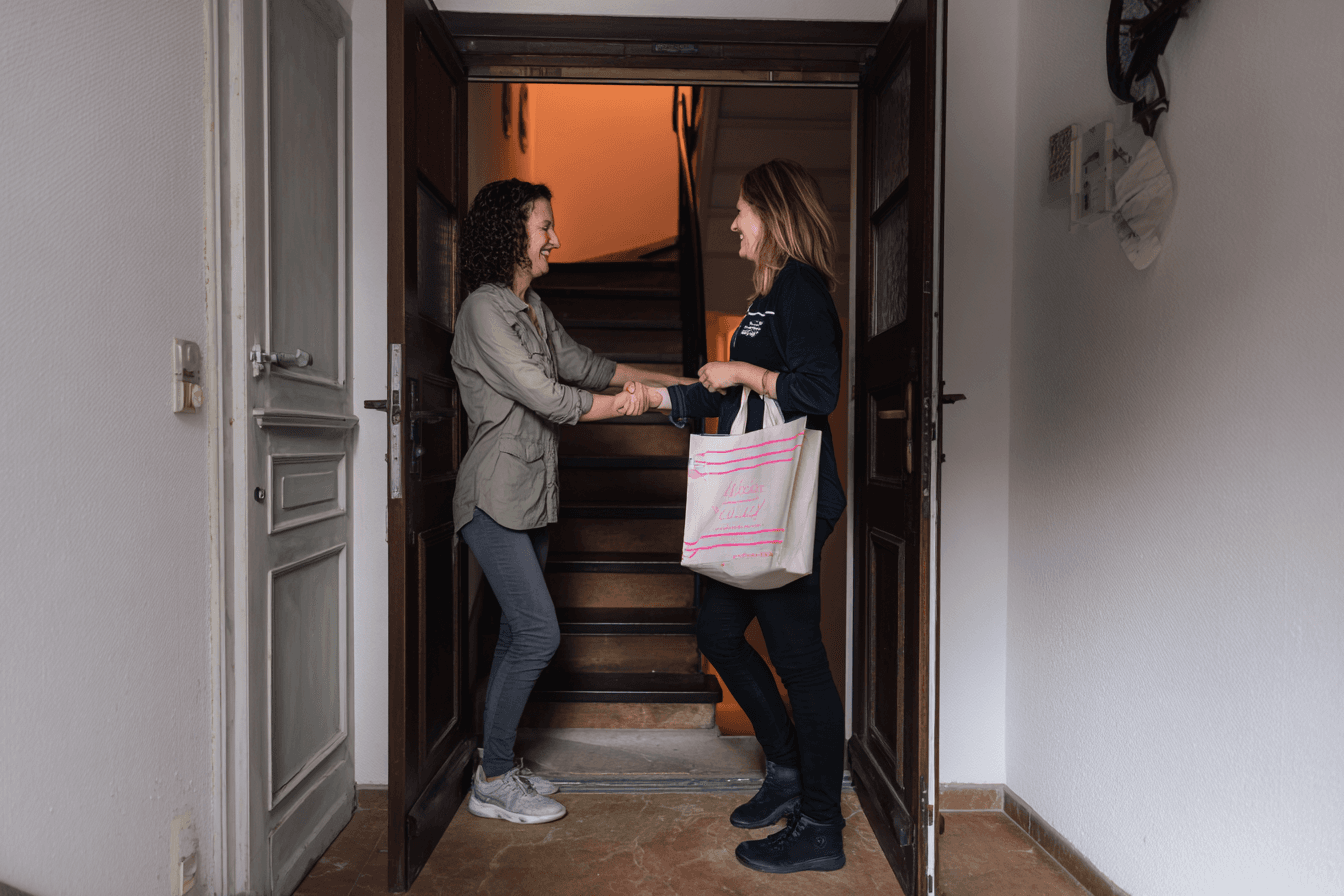

1. Employed or self-employed - the first big decision
Before you pick up a mop, you need to answer a fundamental question: Do you want to work as an employee in private households, or become self-employed?
The answer affects everything - from insurance and taxes to your earnings.
| Criterion | Employed | Self-employed |
|---|---|---|
| Administration | Little - employer handles almost everything | A lot - you're responsible for everything |
| Social insurance | Employer registers and co-pays | You pay everything yourself (AHV, BVG, etc.) |
| Taxes | Simplified or withholding tax | Tax return + bookkeeping required |
| Holidays | Min. 4 weeks paid | None - you plan your own |
| Termination protection | Notice periods per NAV/OR | Clients can cancel at any time |
| Earning potential | Minimum wage + surcharges | Higher, but less regular |
| Freedom | Fixed hours and tasks | Full flexibility |
Our recommendation: Start as an employee. You benefit from NAV protection (Standard Employment Contract for Domestic Workers), have less paperwork, and can focus entirely on your work. Self-employment is always an option later - with more experience and a client base.
Most private households in Switzerland hire their cleaner directly. Tools like Clino make the paperwork so easy for employers that it's the best solution for both sides.
The rest of this guide focuses on the employed option, as it's the most practical path for most beginners.
2. What equipment do you need?
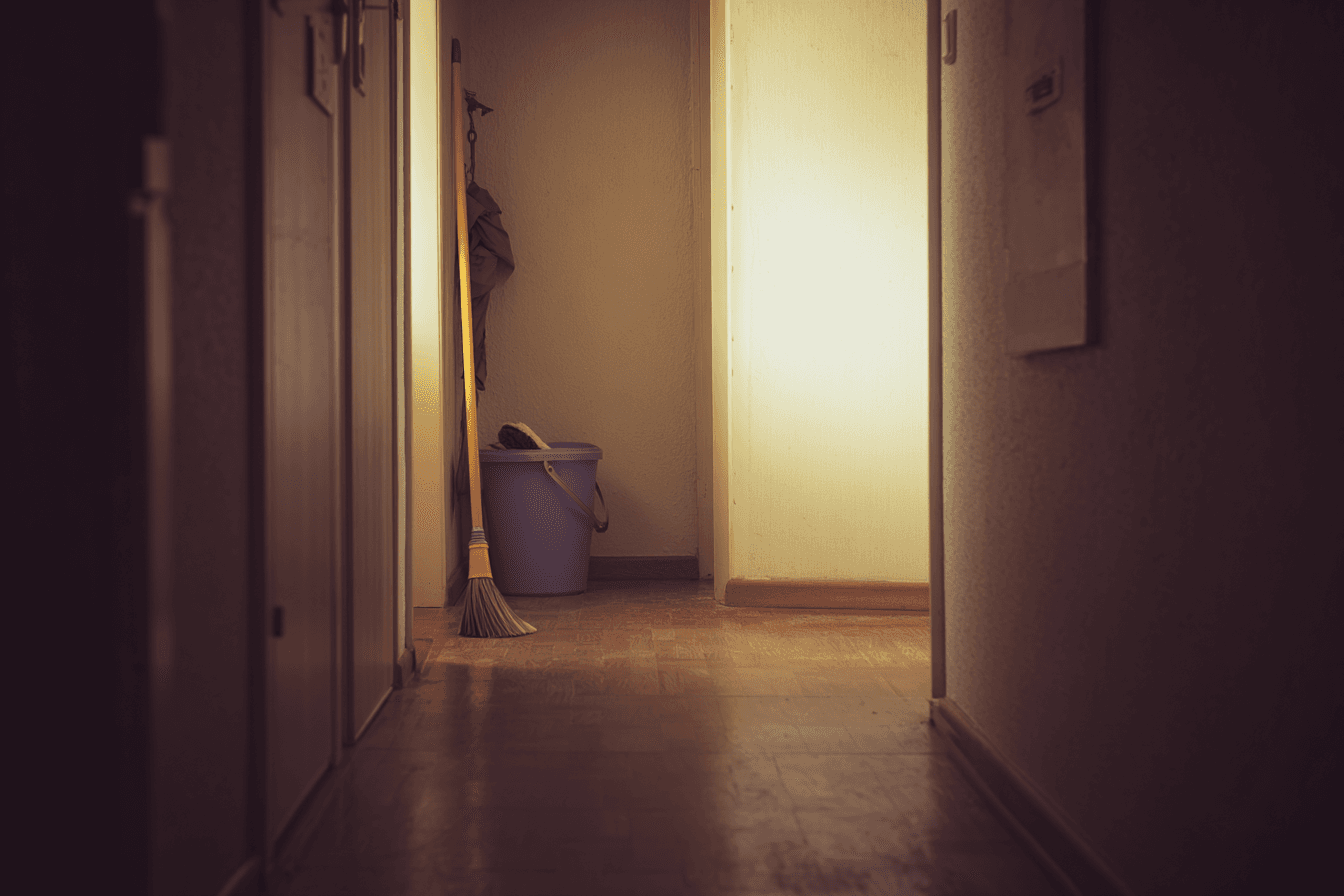
Good news: you don't need much to get started. The household provides most cleaning products and tools. But there are some things you should bring yourself.
What to bring yourself
- Non-slip shoes - safety on wet floors is non-negotiable
- Comfortable work clothes - freedom of movement, washable, not your Sunday best
- Smartphone - for scheduling, communicating with clients, navigation
- Your own microfibre cloths - more hygienic, and you know they're clean
- Rubber gloves - protect your hands from cleaning products
- Knee pads - optional, but your knees will thank you
What the household provides
- Vacuum cleaner and mop
- Cleaning products (all-purpose, bathroom, glass, floor)
- Buckets, cloths, sponges
- Specialised equipment (steam cleaner, etc.)
Budget tip: For your personal starter kit, budget CHF 50-100. Non-slip shoes from CHF 30 (Ochsner Shoes, Dosenbach), a set of microfibre cloths from CHF 10 (Migros, Coop), rubber gloves from CHF 5.
Pro tip: Many experienced cleaners bring their own microfibre cloths - colour-coded by area (blue for bathroom, yellow for kitchen, pink for surfaces). It's more hygienic and looks professional.
3. Cleaning products: What you should know
Even though the household provides the products, you should know what you're using. It shows competence and protects your health.
The basics
| Product | Use | Examples (CH) |
|---|---|---|
| All-purpose cleaner | Surfaces, kitchen | Held, Mr. Proper, Oecoplan |
| Glass cleaner | Windows, mirrors | Ajax, Held, Coop Oecoplan |
| Bathroom cleaner | Taps, tiles, limescale | Cillit Bang, durgol, Held |
| Floor cleaner | Parquet, laminate, tiles | Pronto, Potz, Oecoplan |
| Toilet cleaner | Toilet | WC-Ente, Bref, Held |
Tip: Ask on your first visit which products the household prefers. Many Swiss families value eco-friendly cleaners (Held, Oecoplan, Ecover). Show that you care about this too.
Caution: Always wear gloves when working with cleaning products. Skin allergies and eczema are common in the cleaning industry. If you react sensitively, talk to your employer about alternatives.
4. Administrative steps: The paperwork

This is the part many people dread - but it's doable. Here's exactly what you need to do step by step:
Get your AHV number
If you don't have one yet: you can get your AHV number from your municipality or the cantonal compensation office. As an EU/EFTA citizen, you receive it automatically upon registration.
Register with your municipality
If you're new to Switzerland or moving: register at your municipality's residents' office within 14 days. Bring your passport, rental contract and employment contract.
Take out health insurance
Basic health insurance (KVG) is mandatory in Switzerland - for everyone, no exceptions. Deadline: 3 months after arrival. Compare premiums at priminfo.admin.ch.
Sign an employment contract
Insist on a written contract. It regulates salary, working hours, holidays and notice periods. Our free contract template shows what needs to be included.
Make sure your employer registers you
This is the most important point. Your employer must register you with the AHV compensation office, accident insurance and, if applicable, withholding tax. A guide for employers can be found in our article Registering your cleaner.
Warning: If your employer doesn't register you, you're working illegally. This has serious consequences - for you too. Read about the risks here.
Good to know: As an employee, YOU don't need to register with AHV - your employer does that. But make sure they actually do it! Ask for the registration confirmation.
Cleaning & Household
The classic: rights, safety and pro techniques for cleaners.
- ~40 min
- in your language
- PDF certificate with QR code
5. Insurance you need
In Switzerland, you're well covered - if everything is done correctly. Here's an overview of the insurance that concerns you:
Health insurance (KVG)
Mandatory for everyone in Switzerland. You choose your health insurer yourself and pay the premium. With a low income, you may be entitled to premium reductions - ask your municipality.
Accident insurance (UVG)
Your employer pays for occupational accident insurance. But note: if you work less than 8 hours per week for one employer, only occupational accidents are covered. Non-occupational accidents (leisure) must be insured through your health insurance.
Important with multiple employers: If you don't work 8+ hours for any single employer but do in total, you are still NOT automatically covered for non-occupational accidents. Check your UVG status carefully.
What your employer pays and has to take out: Insuring a cleaner: duties and costs.
Liability insurance
Not mandatory, but strongly recommended. If you damage something valuable while cleaning, private liability insurance protects you from high costs. From CHF 5-10 per month with most Swiss insurers (Mobiliar, Helvetia, AXA, Zurich).
Insurance if you're self-employed
As a self-employed person, you must organise ALL insurance yourself: AHV contributions, UVG, daily sickness benefits, possibly BVG. More in our article on the NAV for domestic work.
6. How do you find clients?
The most important question after the paperwork: where do the clients come from? In Switzerland, these channels work best:
Word of mouth (the classic)
By far the most effective method in Switzerland. Tell friends, neighbours, acquaintances and the expat community that you're starting as a household cleaner. Good cleaners get recommended - it happens faster than you think.
Online platforms
- Batmaid - major cleaning platform in Switzerland
- tutti.ch / anibis.ch - post ads (free)
- Facebook groups - local neighbourhood groups, expat groups
- Nextdoor - neighbourhood app, popular in Swiss cities
Platforms like Batmaid handle placement but take a large margin. Many cleaners earn more when clients hire them directly.
Flyers in the neighbourhood
A simple flyer in the letterbox or on the noticeboard at Coop/Migros works surprisingly well. Name, phone number, what you offer - that's all it takes.
Cleaning company as a stepping stone
If you don't have contacts yet, a cleaning company can be the first step. You get assignments immediately, learn different households and gain experience. Later, you can work directly for families.
Tip: Start with 2-3 clients and build up slowly. Better a few satisfied clients than many half-hearted jobs. Quality speaks for itself. By the way: our article Finding a cleaner shows how employers search for cleaners - useful for understanding their perspective.
7. Pricing: What can you charge?
Wages for cleaners in Switzerland are regulated by law - at the minimum. The NAV for domestic work sets minimum wages that cannot be undercut:
NAV minimum wages (gross)
| Category | Minimum wage/hour |
|---|---|
| Unskilled, no experience | CHF 20.35 |
| With 4+ years of experience | CHF 22.30 |
| With EFZ (building cleaner certificate) | CHF 24.55 |
Typical hourly wages by region
| Region | Gross wage/hour |
|---|---|
| Zurich, Zug, Basel | CHF 28-35 |
| Geneva, Lausanne | CHF 30-38 |
| Bern, Lucerne | CHF 26-32 |
| Rural areas | CHF 25-30 |
What you can actually charge depends on several factors: experience, references, language skills, special services (ironing, deep cleaning, windows) and the region. For a detailed overview by canton, read our Cost comparison by canton.
Tip: Don't sell yourself short just to get clients. If you're too cheap, you won't be valued and you'll hardly be able to raise prices later. Better to start realistically and convince with good work.
With our Salary calculator you can calculate exactly what's left of your gross wage after deductions - including AHV, ALV and withholding tax.
8. Taxes and payroll
Taxes sound complicated, but as an employed cleaner they're surprisingly simple - because your employer does most of the work.
Simplified payroll procedure
For wages up to CHF 22'680 per year per employer, the simplified payroll procedure can be used. Your employer pays a flat rate of about 5% of gross wages as withholding tax - and that's it. You don't need to declare this income in your tax return.
Withholding tax (for B and L permits)
If you have a B or L permit, withholding tax is deducted directly from your wages. The rate depends on the canton, marital status and income. You generally don't need to file a separate tax return (except with high income or upon request).
Taxes if you're self-employed
This is more complex: you must declare all income, settle AHV contributions yourself, keep receipts and file a proper tax return. Without bookkeeping skills, we recommend a fiduciary.
Calculate your net wage: Our Salary calculator for domestic workers shows you in seconds what's left of your gross wage - with all social deductions and withholding tax.
9. Tips from experienced cleaners
These tips come from professionals who have worked in Swiss households for years:
Work systematically: Always from top to bottom, from back to front. This way, no dirt falls on already cleaned surfaces.
Punctuality matters: In Switzerland, punctuality matters more than almost anything else. Better to be 5 minutes early than 1 minute late.
Communicate clearly: On your first visit, discuss with the client exactly what's expected. Write it down. This prevents misunderstandings.
Set boundaries: Clarify beforehand which tasks are included in your hours. Window cleaning, ironing or garden work aren't automatically included.
Look after your body: Cleaning is physical work. Use knee pads, alternate hands, take breaks. Back pain is preventable.
Build routines: Create a fixed sequence for each household. It saves time and you won't forget anything.
Pro tip: For deep cleans or special jobs: take before-and-after photos. It's good for your confidence, as a reference for new clients, and in case there are any disputes.
10. Common mistakes when starting out
We see these mistakes again and again - avoid them:
Working too cheaply to get clients. This undercuts the whole industry and you'll hardly be able to raise prices later. At least stick to the NAV minimum wages.
No written employment contract. Verbal agreements lead to problems. Always insist on a contract - use our free template.
Taking on too many hours at once. Cleaning is physically demanding. Start slowly and increase gradually. Burnout in the first month helps nobody.
Accepting undeclared work. «We'll do it without registration, I'll pay you more.» Decline this. The risks are enormous - fines, no insurance coverage, no AHV contributions for your pension.
Not knowing your own rights. You're entitled to holidays, sick pay, termination protection and more. Read our article Rights as a cleaner - knowledge protects.
Frequently asked questions
Do I need qualifications to work as a cleaner?
No, formal qualifications aren't necessary. Experience and reliability count more. If you wish, you can obtain a Federal Certificate of Competence (EFZ) as a building cleaner - this increases the minimum wage and your market opportunities.
How many hours per week can I work?
That depends on your residence permit and your employers. With one employer, up to 45 hours/week are allowed. Many work part-time for several households - e.g. 3-4 hours with 4-5 families, so 12-20 hours per week.
Can I clean for multiple families at the same time?
Yes, absolutely. Most cleaners work for multiple households. Each employer must register you separately and issue their own employment contract. With less than 8 hours per week per employer, you must arrange your non-occupational accident insurance yourself through your health insurer.
What do I do if something breaks?
Report it immediately and be honest. Small damages are usually tolerated - accidents happen. Liability insurance (CHF 5-10/month) protects you against larger damages. The employment contract should regulate liability for damages.
What about holidays as a cleaner?
You're entitled to at least 4 weeks of paid holidays per year (5 weeks if under 20 or over 50). With hourly wages, a holiday surcharge of 8.33% (or 10.64%) is added to gross wages and shown on every payslip.
Do I need to register with AHV myself?
No, if you're employed, that's your employer's obligation. They register you, deduct your AHV share (5.3%) from wages and pay their share (5.3%) on top. But check that they actually do it - otherwise you're working illegally.
Can I get a residence permit as a cleaner?
As an EU/EFTA citizen, you can apply for a short-term residence permit (L) or residence permit (B) with an employment contract. For third-country nationals it's more difficult - you generally need a permit before you can work. Contact the migration office in your canton. Detailed information can be found in our Guide for cleaners from abroad.
Sources
- State Secretariat for Economic Affairs SECO - Standard employment contract for domestic workers
- Federal Social Insurance Office BSV - AHV/IV fact sheets
- Federal Tax Administration ESTV - Simplified payroll procedure
- Swiss Employers' Association - Wage recommendations for domestic work
- priminfo.admin.ch - Health insurance premium comparison
Disclaimer: This article is for general information only and does not constitute legal advice. Although we take the greatest care to ensure accuracy, we accept no liability for completeness or timeliness. For binding legal information, contact a specialist or your cantonal employment office. Last updated: March 2026.
Further reading
Working without a contract?
We help you for free to understand your work situation and get things sorted. Write to us or leave your details. We'll get back to you personally.
One quick thing: where are you right now?
Your employer uses Clino? Even better.
If your employer uses Clino, they get guided step by step through the employment contract, monthly payslip, AHV registration and withholding tax. Your payslips are always available digitally.
30 days free trial · Cancel anytime · CHF 19.90/month after
