Childcare
If a childminder works at your home, you're the employer

Who is the employer, and what do you have to do?
3 to 4 clicks, answer in francs.
1. Where is your child looked after?
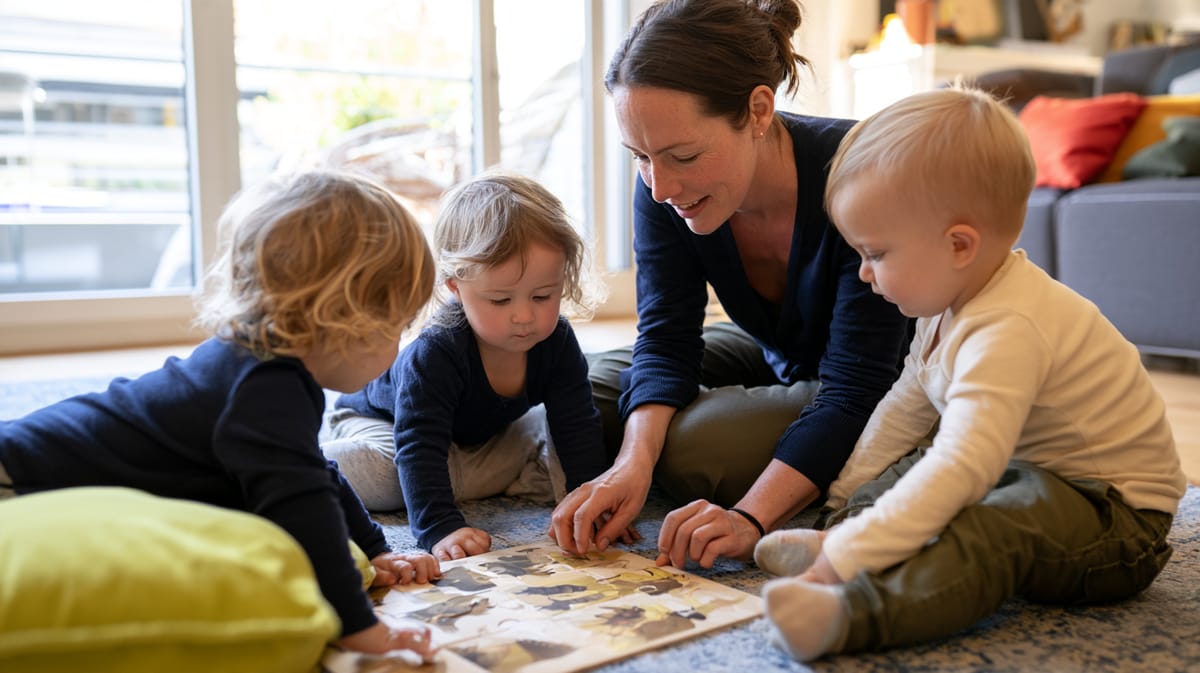
Yes, arranging it privately is allowed. Where the care happens decides who the employer is. In your home it is you, just as with a nanny: AHV registration from the first franc and accident insurance (UVG), even for a few hours a week. In her home she usually counts as your employee too if she works only for you, until the compensation office recognises her as self-employed. If it runs through a day-family organisation, the organisation is the employer. Notifying child protection is the childminder's own duty.
What it costs done correctly, example canton of Zurich at 2026 contribution rates: care in your home, 20 hours a week at CHF 30, comes to CHF 3'040 a month, of which CHF 223 are employer contributions (AHV/IV/EO 5.3 %, ALV 1.1 %, FAK, accident insurance). The check below shows the figure for your canton.
At her home: employed or self-employed?
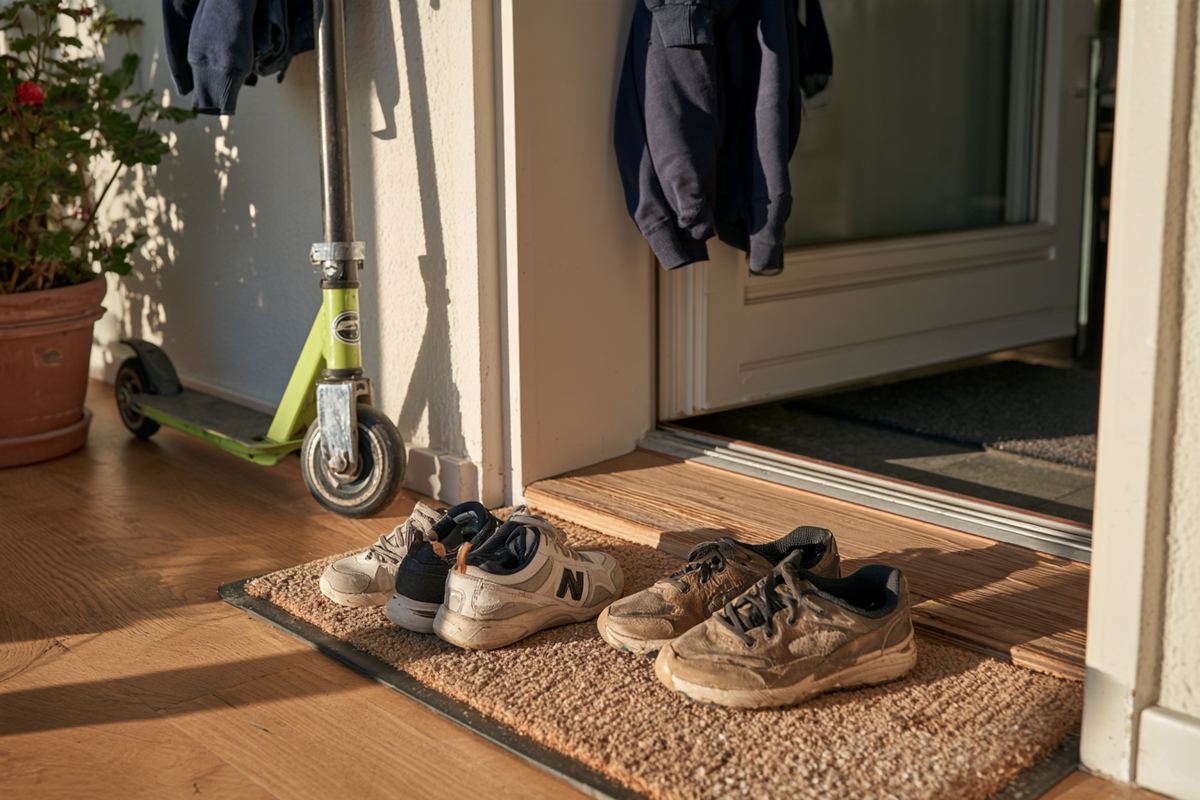
In your home it is clear: anyone who looks after a child in the parents' household earns a wage (WML Rz 4114), and you are the employer, as with a nanny, so you register her with the AHV. At her home the AHV makes a distinction. Through an organisation, she is employed by the organisation. If you take your child to her directly, it only counts as a wage if her business risk is low and she depends strongly on you for how the work is organised (WML Rz 4113). These are the signs the compensation office weighs:
Points to employment
You are the employer
- Looks after only your children
- You set the hours and rules
- Fixed rate, no risk of her own
- Does not present herself as a business
Points to self-employment
She settles her own contributions
- Looks after children of several families
- Sets her own hours and routines
- Carries her own risk, e.g. unpaid bills
- Advertises, writes her own invoices
Notification and authorisation: her duty, the canton's rules
The federal Foster Care Ordinance requires a notification for day care, not an authorisation. Cantons may be stricter, as these three examples show. The duty falls on the childminder, not on you. Ask anyway before your child goes to her: notified day families are supervised, in the city of Zurich with at least one visit a year.
Federal, Art. 12 PAVO
Anyone who publicly offers to look after children under 12 regularly and for pay in their own home notifies the authority.
Cantons may require more (Art. 3 PAVO).
- ZHZurich
Notification
Above 25 hours a week for one child, relatives and acquaintances included. At most 6 children in care at once.
- BEBern
Notification in advance
At least 1 month before starting, to the cantonal Office for Integration and Social Affairs. With an organisation, it notifies.
- VDVaud
Authorisation
Authorisation from the municipality needed. Looking after close relatives, for example, is exempt.
Costs and tax deduction
A day-family organisation charges a rate per hour and child, in the Zürcher Oberland for example CHF 11.50 from 18 months and CHF 13.20 for younger children, before subsidies. The municipality often reduces this rate according to income; in the canton of Bern, childcare vouchers are only available through a day-family organisation. Privately, there is no organisation to pay, but as the employer you carry the social contributions. The status check above works them out for your canton.
If both parents work, you deduct the cost as third-party childcare, up to CHF 25'800 per child for federal tax. The tax deduction calculator shows what that is worth. Which receipt counts is explained in deducting household help from your taxes. Daycare, day family and nanny compared: Daycare, nanny or childminder?.
You are the employer? Get it right in a few minutes
Whether a childminder at her home or a nanny at yours: Clino prepares the AHV registration and walks you through it, creates the payslip every month and, at year end, the statement of childcare costs for your tax deduction. Nothing is charged before day 30.
Try free for 30 daysFrequently asked questions
Can I arrange a childminder privately?
Does a childminder need an authorisation?
Is my childminder employed or self-employed?
What if she looks after my child in our home?
Can I deduct the childminder's cost from my taxes?
I want to become a childminder myself. What do I have to do?
Sources
- Foster Care Ordinance (PAVO), SR 211.222.338, Art. 2, 3 and 12 - fedlex.admin.ch
- FSIO, Directives on the determining wage (WML), Rz 4113 and 4114 - sozialversicherungen.admin.ch
- AHV leaflet 2.02, contributions of the self-employed - ahv-iv.ch
- City of Zurich, leaflet on the supervision of day families (V TaK) - stadt-zuerich.ch
- Canton of Bern, GSI: supervision and authorisation, day families - www.gsi.be.ch
- Canton of Vaud, OAJE: guidelines on family day care (LAJE) - vd.ch
- Tagesfamilien Zürcher Oberland, tariff before subsidies - tfzo.ch