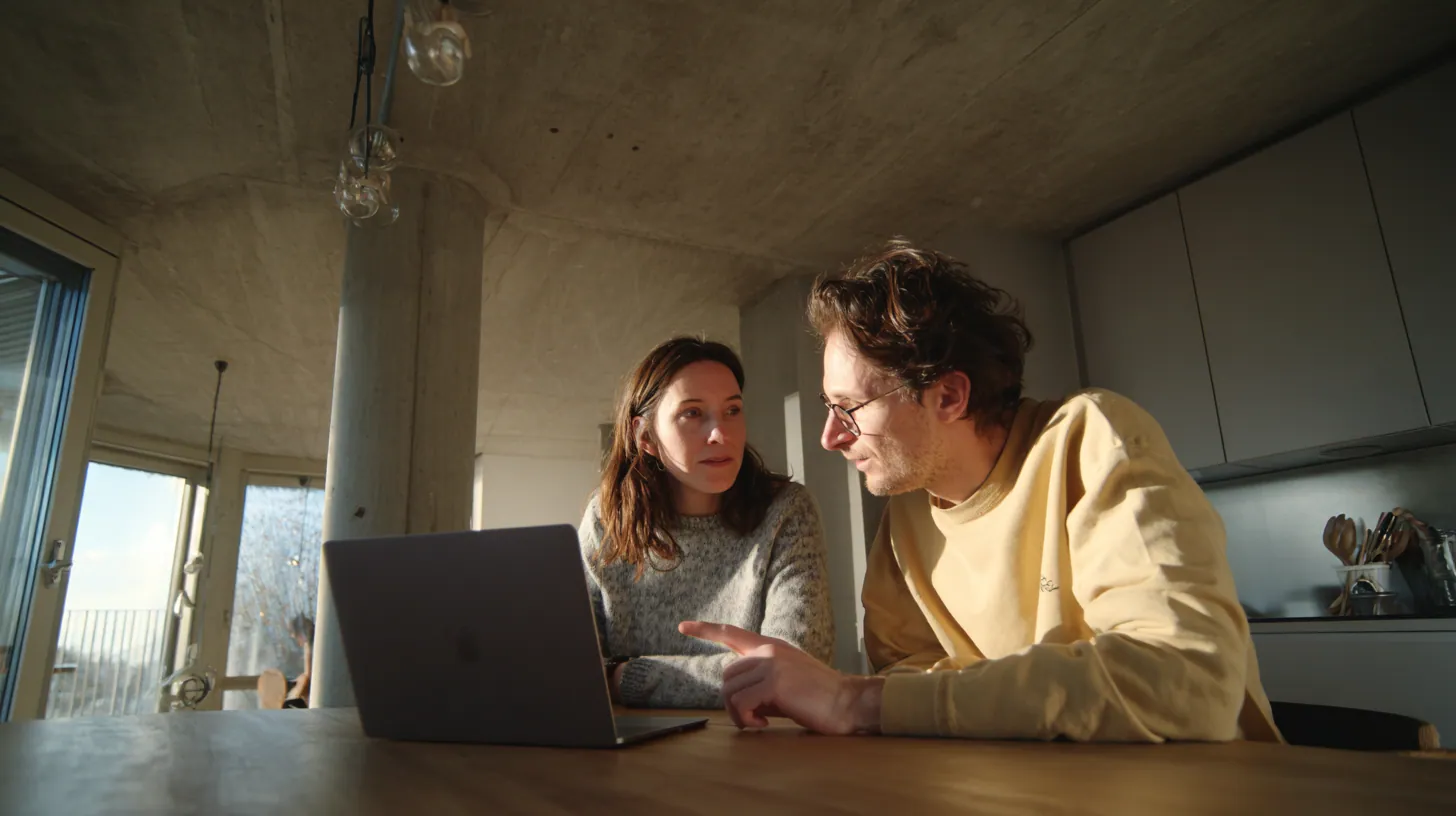
10 households: that is how many a cleaner on the federal minimum wage needs to get above the poverty line
A cleaner who works in private households at the federal minimum wage of CHF 20.35 and cleans for 3.5 hours a week in each household needs about 10 households (9.95 before rounding) in 2027 on the Swiss average before her net wage is above the poverty line: 34.8 paid hours a week, spread across 10 employers. This minimum wage is binding only from 5 hours a week with the same employer: for a job of 3.5 hours, 20 cantons have none at all. She needs the most hours in the canton of Ticino (36.0), the fewest in the canton of Geneva (29.9). Calculated for a single person, with the mean health-insurance premium of her canton, before premium reduction and taxes. All 26 cantons.
Summary
A cleaner in private households rarely has one job. She has many small ones: in the job ads that state a number of hours, households are looking for a median of 3.5 hours a week. Using its own wage calculator and the 2027 rates, Clino calculated how many such jobs it takes before the net wage is above the poverty line of the Federal Statistical Office (BFS), plus the health-insurance premium, which is not included in that line.
At the federal minimum wage it is about 10 households on the Swiss average, more precisely 34.8 paid hours a week. The number is on a knife-edge: before rounding it is 9.95, and with the basic needs amount that the SKOS (the Swiss Conference for Social Welfare) has recommended since 2025 it would be 10.06, that is 11. If the jobs are smaller, it takes more: 14 households at 2.5 hours, 18 at 2 hours. A single parent raising two children would need 15 households and 50.3 paid hours a week: more than a full week holds. The calculation applies before premium reduction and taxes and without the travel between households.
The individual household is doing nothing wrong here: 3.5 hours a week is what many households need, and most offer more than the minimum wage. A household that registers its cleaner gives her AHV contributions from the first franc, unemployment insurance and insurance against occupational accidents. What is missing arises from the fragmentation: none of the 10 jobs reaches the pension fund, none insures accidents in her free time, and in 20 cantons she is not even protected by a minimum wage. The occasion for the calculation: new cantonal minimum wages apply from 1 January 2027, the BFS is expected to publish the new poverty figures in February, and on 28 February 2027 Switzerland votes on the relationship between collective labour agreements and cantonal minimum wages.
About 10 households, 34.8 hours: the calculation for Switzerland
Minimum wage for unqualified staff under the federal standard employment contract for domestic work (NAV Hauswirtschaft), CHF 20.35 plus holiday pay, net after AHV/IV/EO and ALV, against the BFS poverty line plus the mean health-insurance premium (together CHF 2,876 a month for a single person). The number 10 is on a knife-edge: no official statistic measures how many hours a cleaner works per household. Before premium reduction and taxes, without unpaid travel time.
One job: 3.5 hours a week at the federal minimum wage of CHF 20.35. On top comes holiday pay of 8.33%, because a worker paid by the hour earns nothing during her four weeks of holiday: CHF 22.05 gross an hour. After the deductions for AHV/IV/EO and ALV (6.4%), CHF 20.63 net remains. With 48 working weeks, that is 14 hours and CHF 289 net a month per household.
The BFS poverty line for a single person is CHF 2,388 a month on the Swiss average (SILC 2024 survey). It covers basic needs and housing costs. The health-insurance premium is not included, because the BFS deducts it from income beforehand. We therefore add the mean adult premium for 2027, CHF 487.60 on the Swiss average: together CHF 2,876 a month.
CHF 2,876 divided by CHF 289 gives 9.95. So she needs about 10 households. The margin is thin: with 10 households she is CHF 13 a month above the line. If one household drops out, she is CHF 276 below it. And the line itself is that of 2024: it contains a basic needs amount of CHF 1,031, whereas the SKOS has recommended CHF 1,061 since 2025. Calculated with that, it would be 10.06 households, rounded up to 11.
No official statistic measures how many hours a cleaner works per household. The 3.5 hours are the median of 66 job ads stating hours; 46 of them are looking for fewer than 5 hours. A second source points to even smaller jobs: in 2024, Chèque Emploi Fribourg processed a payroll of CHF 10.7 million for 3,130 active contracts, that is CHF 3,420 per contract and year. At the mean net hourly wage of CHF 26.56 reported there, that corresponds to 2.2 to 2.7 hours a week (derived by Clino; contracts that ran for only part of the year pull the figure down). The headline is therefore more of a lower bound: smaller jobs mean more households. It only takes fewer than 10 from 4 hours per household (9).
For a job of 3.5 hours, no minimum wage applies in 20 cantons
The federal minimum wage for domestic workers is set in the standard employment contract for domestic work (NAV Hauswirtschaft): CHF 20.35 an hour for unqualified staff, without holiday pay. But it does not apply to employees who “work on average fewer than five hours a week for the same employer” (Art. 2 of the NAV). That is exactly the typical job of a cleaner. Someone with 10 households at 3.5 hours each works 35 hours in the sector, and in none of these households does the federal minimum wage apply to her.
Gross hourly wage without holiday pay, as of 1 January 2027; Neuchâtel and Jura: 2026 amount, the 2027 amount had not been published on 24 November 2026. In the city of Lucerne a municipal minimum wage of CHF 23.00 applies. Source: Fedlex (NAV Hauswirtschaft, Art. 2 and 5), cantonal legislation, compiled by Clino.
Only the cantonal minimum wages are binding from the first hour: Geneva CHF 24.73, Basel-City CHF 22.50, Jura CHF 21.40, Neuchâtel CHF 21.35, Ticino CHF 20.50 (as of 1 January 2027; in the cantons of Neuchâtel and Jura the amount for 2027 has not yet been published, we calculate with that of 2026). In the canton of Vaud the cantonal standard employment contract provides for CHF 19.95, which can be varied in writing; in the city of Lucerne the municipal minimum wage of CHF 23.00 applies. In the remaining 20 cantons no minimum wage is prescribed for such a small job.
In this study, “at the federal minimum wage” therefore means: at the rate the Confederation prescribes for the same work from 5 hours. In 20 cantons it is a reference wage for a job of 3.5 hours, not an obligation. The wage is protected everywhere only if she works 5 hours per household; she would then need 7 households. On 1 January 2027 three cantonal minimum wages rise: Geneva to CHF 24.73, Basel-City to CHF 22.50, Ticino for private households to CHF 20.50. The federal NAV stays at CHF 20.35 until the end of 2028.
Ticino 36.0 hours, Geneva 29.9: with 10 households it is not enough in 3 cantons
Rounded to whole households, the cantons look almost the same: 10 in 22 cantons, 11 in 3, 9 in the canton of Geneva. The difference shows in hours and francs. The ranking is ordered by the paid hours a week she needs. The second figure shows what is left at the end of the month with 10 households: in the canton of Ticino she is CHF 81 short, in the canton of Vaud she is CHF 45 short, in the canton of Basel-Country she is CHF 44 short. In the canton of Bern she has CHF 6 left, in the canton of Solothurn CHF 7, in the canton of Geneva CHF 511.
| # | h/week | |
|---|---|---|
| 1 | Ticinopremium CHF 603.60 · minimum wage CHF 20.50 · 11 households | 36.0CHF −81 |
| 2 | Vaudpremium CHF 543.50 · reference wage CHF 20.35 · 11 households | 35.6CHF −45 |
| 3 | Basel-Countrypremium CHF 544.50 · reference wage CHF 20.35 · 11 households | 35.5CHF −44 |
| 4 | Bernpremium CHF 494.40 · reference wage CHF 20.35 · 10 households | 34.9CHF +6 |
| 5 | Solothurnpremium CHF 493.50 · reference wage CHF 20.35 · 10 households | 34.9CHF +7 |
| 6 | Zurichpremium CHF 477.00 · reference wage CHF 20.35 · 10 households | 34.7CHF +24 |
| 7 | Schaffhausenpremium CHF 470.60 · reference wage CHF 20.35 · 10 households | 34.6CHF +29 |
| 8 | Fribourgpremium CHF 465.50 · reference wage CHF 20.35 · 10 households | 34.6CHF +35 |
| 9 | Aargaupremium CHF 464.70 · reference wage CHF 20.35 · 10 households | 34.6CHF +36 |
| 10 | Valaispremium CHF 460.90 · reference wage CHF 20.35 · 10 households | 34.6CHF +37 |
| 11 | Thurgaupremium CHF 433.20 · reference wage CHF 20.35 · 10 households | 34.2CHF +68 |
| 12 | St. Gallenpremium CHF 427.40 · reference wage CHF 20.35 · 10 households | 34.1CHF +73 |
| 13 | Glaruspremium CHF 426.50 · reference wage CHF 20.35 · 10 households | 34.1CHF +74 |
| 14 | Appenzell Outer Rhodespremium CHF 422.30 · reference wage CHF 20.35 · 10 households | 34.0CHF +79 |
| 15 | Lucernepremium CHF 422.20 · reference wage CHF 20.35 · 10 households | 34.0CHF +79 |
| 16 | Neuchâtelpremium CHF 558.80 · minimum wage CHF 21.35 (as of 2026) · 10 households | 34.0CHF +84 |
| 17 | Schwyzpremium CHF 418.50 · reference wage CHF 20.35 · 10 households | 34.0CHF +82 |
| 18 | Grisonspremium CHF 415.60 · reference wage CHF 20.35 · 10 households | 34.0CHF +85 |
| 19 | Jurapremium CHF 551.00 · minimum wage CHF 21.40 (as of 2026) · 10 households | 33.9CHF +99 |
| 20 | Nidwaldenpremium CHF 397.20 · reference wage CHF 20.35 · 10 households | 33.7CHF +104 |
| 21 | Obwaldenpremium CHF 386.70 · reference wage CHF 20.35 · 10 households | 33.6CHF +114 |
| 22 | Uripremium CHF 377.70 · reference wage CHF 20.35 · 10 households | 33.5CHF +123 |
| 23 | Appenzell Inner Rhodespremium CHF 340.50 · reference wage CHF 20.35 · 10 households | 33.1CHF +160 |
| 24 | Zugpremium CHF 324.90 · reference wage CHF 20.35 · 10 households | 32.9CHF +176 |
| 25 | Basel-Citypremium CHF 570.60 · minimum wage CHF 22.50 · 10 households | 32.4CHF +236 |
| 26 | Genevapremium CHF 610.60 · minimum wage CHF 24.73 · 9 households | 29.9CHF +511 |


One person. Calculated with the cantonal minimum wage where it also applies to a few hours, otherwise with the federal minimum wage of CHF 20.35, which is not binding for jobs of under five hours a week (reference wage). BFS poverty line (SILC 2024, CHF 2,388) plus the canton's mean adult premium 2027. Second figure: net wage from 10 households minus the line, CHF a month. Before premium reduction and taxes.
The darker, the more hours. The differences come from the health-insurance premium and the canton's minimum wage; the BFS poverty line is a Swiss average. Source: BFS, BAG, Fedlex and cantons, Clino calculation.
Two things set the cantons apart in this calculation: the premium and the minimum wage. Geneva has the highest mean premium at CHF 610.60 and is still at the bottom of the ranking, because the highest minimum wage applies there (CHF 24.73). Ticino has the second-highest premium (CHF 603.60) and a minimum wage of CHF 20.50: first place.
In the 21 cantons where we calculate with the federal minimum wage, the premium alone decides: between Vaud (35.6 hours) and Zug (32.9) there is a gap of 2.7 hours a week. The poverty line itself is the same in every canton, because the BFS publishes only a Swiss average. With the canton's rents the order would look different; that is shown further down as an estimate.
At the wage from the job ads 7 households are enough, in 8 cantons it takes 9
Most households offer more than the minimum wage. In our analysis of job ads for domestic workers the median of the 1,830 ads stating a wage was CHF 29.00 an hour. At this wage a cleaner needs 7 households on the Swiss average instead of 10: 3 fewer, 24.4 instead of 34.8 hours a week.
The difference follows the language border. In German-speaking Switzerland job ads offer a median of CHF 30.00: in 16 cantons 7 households are enough. In French-speaking Switzerland and Ticino it is CHF 25.00: 9 households are needed in the cantons of Fribourg, Basel-City, Ticino, Vaud, Valais, Neuchâtel, Geneva and Jura. In the canton of Geneva the wage from the job ads changes nothing: the ads offer a median of CHF 25.00, the 2027 minimum wage is CHF 24.73.
Households at 3.5 hours a week each. Wage from the job ads: median of the hourly wages in 1,830 job ads placed by private households (31 August to 29 October 2026), without knowing whether gross or net is meant; calculated as gross wage plus holiday pay. * Median of the language region (fewer than 30 job ads stating a wage in the canton)
Single parent with two children: 15 households, 50.3 hours a week
For a single-parent household with two children under 14, the BFS poverty line is CHF 3,838 a month. With the mother's premium and two child premiums it comes to CHF 4,581 on the Swiss average. We count the child allowances of CHF 430 as part of her income. At the federal minimum wage she would then need 15 households at 3.5 hours each: 50.3 paid hours a week. In 25 of 26 cantons it is more than 42 hours, the most in the canton of Ticino (51.9), the fewest in the canton of Geneva (41.3).
Even a full-time job with a single employer is not enough. 42 hours at the minimum wage give CHF 3,315 net a month on the Swiss average. For a single person that is above the line in all 26 cantons, by CHF 439 on the Swiss average. The mother with two children is, with child allowances, CHF 837 a month short, and that in all 26 cantons: from CHF 144 in the canton of Geneva to CHF 979 in the canton of Ticino.
Not included is what a family in this situation may receive in addition: maintenance payments or advances on maintenance, premium reduction, in some cantons supplementary benefits for families, otherwise social assistance. The calculation shows what the wage alone achieves.
| CHF a month | ||
|---|---|---|
| 1 | Poverty line plus premiums, single parent with two childrenafter deducting child allowances of CHF 430 | CHF 4,151 |
| 2 | Net wage, 12 households at 3.5 hours eachno pension fund, no non-occupational accident insurance | CHF 3,467 |
| 3 | Net wage, 42 hours with a single employerafter pension fund (CHF 99) and non-occupational accident insurance | CHF 3,315 |
| 4 | Poverty line plus premium, one personBFS, SILC 2024, plus mean premium 2027 | CHF 2,876 |
Minimum wage of the NAV Hauswirtschaft, CHF 20.35 plus holiday pay. Child allowances: federal minimum rate for two children, CHF 430. Without maintenance payments, premium reduction, supplementary benefits for families and taxes.
None of the 10 jobs reaches the pension fund, none insures accidents in her free time
The pension fund (second pillar, BVG) is compulsory from an annual wage of CHF 23,040 (2027), calculated per employer. A job of 3.5 hours at the federal minimum wage brings in CHF 3,704 a year, 16% of the threshold. A single household would have to employ her for 21.8 hours a week for the threshold to be reached. So none of her 10 jobs pays into a second pillar, although together she earns CHF 37,036 a year. Because her wages together are above the threshold, she can insure herself voluntarily, with the Substitute Occupational Benefit Institution (Auffangeinrichtung) or with the pension fund of one of her employers if its regulations provide for it (Art. 46 BVG). Each employer then owes her half of the contributions on the wage she earns with that employer. It does not happen by itself: she has to apply for it.
The same goes for accidents. She is insured against occupational accidents in every household; below 8 hours a week, an accident on the way to or from work also counts as an occupational accident (Art. 7 UVG, the Accident Insurance Act). Insurance against non-occupational accidents only applies from 8 hours a week with the same employer. With 10 jobs of 3.5 hours she works 35 hours and in her free time is still insured only through her health insurance, with a deductible and without a daily allowance. What that costs in an individual case is shown in our study on the accident gap of domestic workers with several employers.
The comparison with a single job shows the consequence. The same 42 hours, spread across 12 households, give CHF 3,467 net a month; with a single employer it is CHF 3,315. The fragmented week brings CHF 152 more cash, because neither the pension fund (CHF 99 a month, plus at least as much from the employer) nor non-occupational accident insurance is deducted. That is exactly what she will lack later.
What every registered job brings nonetheless: AHV/IV/EO contributions from the first franc, meaning pension years and entitlement to a disability pension and maternity allowance; unemployment insurance; insurance against occupational accidents; child allowances. Without registration she would have none of this.
The average working week in private households is 22.1 hours: at the minimum wage that is CHF 1,055 a month short
10 households have to be found first. According to the Swiss Labour Force Survey of the BFS (SAKE, as reported by ILOSTAT), people employed in the sector “Private households as employers” worked an average of 22.1 hours a week in 2025, women 18.3; across all sectors the average was 35.2. At the federal minimum wage, 22.1 hours give CHF 1,821 net a month: CHF 1,055 less than the poverty line plus premium. The average working week in the sector covers 63% of the hours it would take.
That does not mean these people are poor: many earn more than the minimum wage, and whether someone is poor depends on the income of the whole household. It means that work in a private household at the minimum wage is rarely enough to live on by itself.
| h/week | ||
|---|---|---|
| 1 | Actually worked, all sectorsaverage of all employed people | 35.2 |
| 2 | Needed to reach the poverty line plus premiumat the federal minimum wage of CHF 20.35, one person | 34.8 |
| 3 | Actually worked, private households as employersat the minimum wage CHF 1,821 net a month, CHF 1,055 below the line | 22.1 |
| 4 | Actually worked, women in private householdsat the minimum wage CHF 1,513 net a month, CHF 1,363 below the line | 18.3 |
Weekly hours actually worked per employed person by sector, 2025 (ILOSTAT, source: BFS Swiss Labour Force Survey). The sector covers all domestic employees, including carers and nannies. The wage shown is a calculation by Clino at the federal minimum wage; many earn more, and the income of the household they live in is not known.
At risk of poverty: 16.5% of those employed in private households, 8.8% on average across all sectors
The calculation is a model. The statistics show that it describes a real group. According to the BFS SILC 2024 survey, 16.5% of employed people in the sector “Private households as employers” are at risk of poverty (around 18,200 people, confidence interval ±5.9 percentage points). Across all employed people it is 8.8%, around 357,500 people. That is the figure Caritas cited on 28 September 2026: almost 360,000 working poor, 8.8% of all employed people.
By the stricter poverty line, which this study also uses, 4.3% of employed people count as poor, around 175,400 people. In private households as employers it is 6.4%; with a confidence interval of ±3.1 percentage points, this difference is not statistically significant. The difference is clear for working hours: 6.0% of those working mainly part time are poor, 3.0% of those working full time. And for region: 8.5% in Ticino, 1.8% in Central Switzerland.
With the basic needs amount of 2025 it is 11, with full premium reduction 9: what moves the number
The number 10 depends on assumptions. If she cleans for only 2 hours per household, she needs 18 households; at 4 hours, 9. If the households settle under the simplified procedure, 5% withholding tax comes off, and it takes 11. If the premium reduction covers the whole premium, it is 9. With the basic needs amount the SKOS has recommended since 2025, it is 11. The travel between households is unpaid: assuming 30 minutes per visit, 5 unpaid hours come on top of the 35 paid hours.
| Assumption | Households | Paid h/week |
|---|---|---|
| Base calculation: 3.5 hours per household, federal minimum wage | 10 | 34.8 |
| 2 hours per household | 18 | 34.8 |
| 2.5 hours per household | 14 | 34.8 |
| 3 hours per household | 12 | 34.8 |
| 4 hours per household | 9 | 34.8 |
| 5 hours per household | 7 | 34.8 |
| Wage from the job ads (CHF 29.00) | 7 | 24.4 |
| with 5% withholding tax under the simplified procedure | 11 | 36.8 |
| premium fully covered by premium reduction | 9 | 28.9 |
| SKOS basic needs amount in force since 2025 (CHF 1,061) instead of that of 2024 | 11 | 35.2 |
| single parent with two children | 15 | 50.3 |
| with unpaid travel, 30 minutes per visit (assumption) | 10 | 34.8 + 5.0 travel |
Each row changes a single assumption of the base calculation. Travel time is an assumption by Clino, not a measurement: it does not change the number of households, but it does change the time tied up.
And the rent? The BFS poverty line includes housing costs as a Swiss average (CHF 1,257 for a single person). If this part is scaled by the canton's rent level, the ranking shifts markedly: the most hours are then needed in the canton of Zurich (38.4), the fewest in the canton of Jura (29.7); the figures for all cantons are in the table. This is an estimate by Clino, not an official cantonal poverty line: there is no such thing. The yardstick is the average rent of existing tenancies for a two-room flat (BFS, 2024), not the rent someone pays today for a newly let flat, and in small cantons the sample is thin. Calculated with one-room or three-room flats, Zurich and Zug remain in the top three and Jura at the bottom.
Taken on its own, rent moves the cantonal figure the most (range of 8.9 hours a week), then the minimum wage (6.2 hours, almost entirely because of Geneva), and last the premium (3.5 hours).
All cantons at a glance
| Canton | Premium 2027 | Statutory minimum wage under 5 h | Calculated with | h/week | Households | With 10 households: CHF | Job-ad wage | Households | Single parent: households | 42-hour week, single parent: balance | h/week with cantonal rent |
|---|---|---|---|---|---|---|---|---|---|---|---|
| Ticino | 603.60 | 20.50 | 20.50 | 36.0 | 11 | −81 | 25.00 | 9 | 15 | −979 | 33.8 |
| Vaud | 543.50 | 19.95 ‡ | 20.35 | 35.6 | 11 | −45 | 25.00 | 9 | 14 | −718 | 35.3 |
| Basel-Country | 544.50 | none | 20.35 | 35.5 | 11 | −44 | 30.00 | 7 | 15 | −922 | 35.6 |
| Bern | 494.40 | none | 20.35 | 34.9 | 10 | +6 | 30.00 | 7 | 15 | −769 | 33.2 |
| Solothurn | 493.50 | none | 20.35 | 34.9 | 10 | +7 | 28.00 | 8 | 15 | −805 | 32.7 |
| Zurich | 477.00 | none | 20.35 | 34.7 | 10 | +24 | 30.00 | 7 | 15 | −830 | 38.4 |
| Schaffhausen | 470.60 | none | 20.35 | 34.6 | 10 | +29 | 30.00 * | 7 | 15 | −774 | 33.1 |
| Fribourg | 465.50 | none | 20.35 | 34.6 | 10 | +35 | 25.00 | 9 | 14 | −698 | 32.8 |
| Aargau | 464.70 | none | 20.35 | 34.6 | 10 | +36 | 30.00 | 7 | 15 | −780 | 34.4 |
| Valais | 460.90 | none | 20.35 | 34.6 | 10 | +37 | 25.00 | 9 | 14 | −566 | 32.2 |
| Thurgau | 433.20 | none | 20.35 | 34.2 | 10 | +68 | 28.00 | 8 | 15 | −758 | 32.9 |
| St. Gallen | 427.40 | none | 20.35 | 34.1 | 10 | +73 | 30.00 | 7 | 14 | −686 | 32.3 |
| Glarus | 426.50 | none | 20.35 | 34.1 | 10 | +74 | 30.00 * | 7 | 15 | −754 | 31.8 |
| Appenzell Outer Rhodes | 422.30 | none | 20.35 | 34.0 | 10 | +79 | 30.00 * | 7 | 14 | −705 | 30.9 |
| Lucerne | 422.20 | none | 20.35 | 34.0 | 10 | +79 | 30.00 | 7 | 15 | −733 | 33.9 |
| Neuchâtel | 558.80 | 21.35 (2026) | 21.35 | 34.0 | 10 | +84 | 25.00 * | 9 | 14 | −728 | 30.1 |
| Schwyz | 418.50 | none | 20.35 | 34.0 | 10 | +82 | 30.00 | 7 | 14 | −697 | 34.7 |
| Grisons | 415.60 | none | 20.35 | 34.0 | 10 | +85 | 30.00 | 7 | 14 | −681 | 32.7 |
| Jura | 551.00 | 21.40 (2026) | 21.40 | 33.9 | 10 | +99 | 25.00 * | 9 | 14 | −630 | 29.7 |
| Nidwalden | 397.20 | none | 20.35 | 33.7 | 10 | +104 | 30.00 * | 7 | 14 | −607 | 33.4 |
| Obwalden | 386.70 | none | 20.35 | 33.6 | 10 | +114 | 30.00 * | 7 | 14 | −668 | 32.8 |
| Uri | 377.70 | none | 20.35 | 33.5 | 10 | +123 | 30.00 * | 7 | 14 | −613 | 30.6 |
| Appenzell Inner Rhodes | 340.50 | none | 20.35 | 33.1 | 10 | +160 | 30.00 * | 7 | 14 | −558 | 30.7 |
| Zug | 324.90 | none | 20.35 | 32.9 | 10 | +176 | 30.00 | 7 | 13 | −369 | 37.4 |
| Basel-City | 570.60 | 22.50 | 22.50 | 32.4 | 10 | +236 | 25.00 | 9 | 14 | −519 | 32.2 |
| Geneva | 610.60 | 24.73 | 24.73 | 29.9 | 9 | +511 | 25.00 | 9 | 12 | −144 | 29.9 |
| Switzerland | 487.60 | 20.35 | 34.8 | 10 | +13 | 29.00 | 7 | 15 | −837 | 34.8 |
Premium: mean monthly adult premium 2027 (BAG). Wages in CHF an hour. Statutory minimum wage under 5 h: what is prescribed for a job of fewer than five hours a week with the same employer; (2026) = 2027 amount not yet published; ‡ = cantonal standard employment contract, can be varied in writing. Calculated with: cantonal minimum wage, otherwise the federal minimum wage as a reference. With 10 households: net wage minus poverty line and premium, CHF a month. Balance: net wage of a 42-hour week with a single employer plus child allowances, minus poverty line and premiums, CHF a month. Cantonal rent: Clino estimate, housing costs of the poverty line scaled by the canton's rent level (BFS, two-room flat 2024). * Job-ad wage = median of the language region.
What the data do not show, and questions for the authorities
- No statistic measures how many households a cleaner in Switzerland really has. The 3.5 hours come from 66 job ads stating hours, the cross-check from the payroll of a single canton; the calculation is a model, not a survey.
- The poverty line is that of 2024. The SKOS basic needs amount has risen since then; the 2027 line is likely to be higher, and the number of households probably too.
- Lost work is not included: illness, cancelled visits, public holidays, the household's holidays. A worker paid by the hour often bears these herself.
- Question for the BFS: what are the poverty rate and the at-risk-of-poverty rate for employed people with several employers, and for domestic employees by working hours?
- Question for the BSV (Federal Social Insurance Office): how many employees with several employers have insured themselves voluntarily under Art. 46 BVG, and how many of them work in private households?
- Question for SECO: how many employment relationships in private households are below five hours a week and therefore outside the minimum wage of the NAV Hauswirtschaft?
- Question for the cantons of Neuchâtel and Jura: which minimum wage applies from 1 January 2027?
For households: what a small, registered job brings
A household cannot undo the fragmentation, but it can run its own job properly: register it, show the holiday pay separately, provide a payslip. How to do that step by step is set out in the guide to registering a cleaner. What 3.5 hours cost is shown by the wage calculator for domestic workers; which minimum wage applies in which canton is in the overview of the minimum wage for cleaners.
What applies when a cleaner has several employers is explained in the article a cleaner with several employers. On accident insurance below and above eight hours a week: accident insurance for domestic workers. On the second pillar: pension fund for domestic employees. For employees themselves there is the page for domestic employees.
Clino prepares the contract, the AHV registration and the payslip for private households; the household files the registration itself. Related studies: From 18 to 26 Hours: How Long a Domestic Worker on the Minimum Wage Works for Her Health Insurance in 2027 and 2% More Pay Just to Stay Even: the 2027 Wage Round for Domestic Workers, Canton by Canton.
“10 households, 10 employers, no pension fund. That is not down to the individual household. It is because the work is split into small jobs.”
Quellen
- BFS, average poverty lines of selected household types, Durchschnittliche Armutsgrenzen ausgewählter Haushaltstypen (T 20.03.02.01.05), SILC 2024 (2026), https://dam-api.bfs.admin.ch/hub/api/dam/assets/36395137/master
- BFS, poverty rate of employed people by various characteristics, Armutsquote der Erwerbstätigen nach verschiedenen Merkmalen (T 20.03.02.01.03), SILC 2024 (2026), https://dam-api.bfs.admin.ch/hub/api/dam/assets/36395138/master
- BFS, at-risk-of-poverty rates of employed people, Armutsgefährdungsquoten der Erwerbstätigen (T 20.03.02.02.04), SILC 2024 (2026), https://dam-api.bfs.admin.ch/hub/api/dam/assets/36395168/master
- BFS, press release on income, poverty and living conditions 2024 (2026), https://dam-api.bfs.admin.ch/hub/api/dam/assets/36392936/master
- BFS, average rent by number of rooms and canton, Durchschnittlicher Mietpreis nach Zimmerzahl und Kanton (T 09.03.03.01), 2024 (2026), https://dam-api.bfs.admin.ch/hub/api/dam/assets/36398436/master
- BAG, mean premiums 2027 by canton (press release of 29 September 2026) (2026), https://www.bag.admin.ch/de/newnsb/BfuGvedj0OOX
- Fedlex, NAV Hauswirtschaft (SR 221.215.329.4), Art. 2 and 5 (2026), https://www.fedlex.admin.ch/eli/cc/2010/724/de
- Fedlex, Occupational Pensions Act, BVG (SR 831.40), Art. 46, as of 1 January 2027 (2027), https://www.fedlex.admin.ch/eli/cc/1983/797_797_797/de
- Fedlex, Accident Insurance Act, UVG (SR 832.20), Art. 7 and 8 (2026), https://www.fedlex.admin.ch/eli/cc/1982/1676_1676_1676/de
- Fedlex, Accident Insurance Ordinance, Verordnung über die Unfallversicherung (UVV), Art. 13 (2027), https://www.fedlex.admin.ch/eli/cc/1983/38_38_38/20270101/de
- ILOSTAT, Mean weekly hours actually worked per employed person by sex and economic activity (source: BFS Swiss Labour Force Survey, SAKE), Switzerland 2025 (2026), https://ilostat.ilo.org/data/
- Chèque Emploi Fribourg, Rapport de gestion 2024 (annual report) (2025), https://cheque-emploi-fribourg.ch/storage/app/media/uploaded-files/Cheque_Emploi_Rapport-de-gestion-2024.pdf
- Canton of Zurich, social assistance handbook, amounts for basic needs, Beträge für den Grundbedarf für den Lebensunterhalt (SKOS rates from 2025) (2025), https://www.zh.ch/de/soziales/sozialhilfe/sozialhilfehandbuch/flexdata-definition/7-materielle-grundsicherung-wsh/7-1-grundbedarf-gbl/7-1-05-betraege-fuer-den-grundbedarf-fuer-den-lebensunterhalt.html
- Geneva Council of State, minimum wage 2027 (announcement of 7 October 2026) (2026), https://www.ge.ch/node/45040
- Canton of Basel-City, Office of Economy and Labour, minimum wage (2026), https://www.bs.ch/wsu/awa/arbeitsbeziehungen/loehne/mindestlohn
- Canton of Ticino, decree on the minimum wage (BU 34/2026) (2026)
- Canton of Jura, Salaires minimaux (2026), https://www.jura.ch/fr/Autorites/Administration/DES/Economie-et-Emploi-SEE/Conditions-de-travail/Conditions-de-travail/Salaires-minimaux.html
- Canton of Neuchâtel, Conditions salariales (minimum wage) (2026), https://www.ne.ch/themes/economie-et-emploi/conditions-de-travail/conditions-salariales
- Canton of Vaud, Arrêté établissant un contrat-type de travail pour le personnel des ménages privés (ACTT-mpr, RSV 222.105.1) (2024)
- Federal Council, adjustment of the occupational pension thresholds for 2027 (BVV 2) (2026), https://cms.news.admin.ch/fileservice/sdweb-docs-prod-nsbcch-files/files/2026/10/01/d5ae6485-584b-4504-88f3-1c97761a8cb3.pdf
- Caritas Switzerland, press release “Die Schweiz tut zu wenig für Working Poor”, 28 September 2026 (2026), https://cms.caritas.ch/sites/default/files/2026-09/15_mc2026_Caritas_Schweiz_Working_Poor_2026_DE%20%281%29.pdf
- Clino, “What Households Offer a Cleaner” (wages and hours in job ads for domestic workers, 2026) (2026), https://clino.ch/de/presse/inserate-haushaltshilfe-2026
Do you represent an organization supporting households or workers?
Become a partner →Further Resources
Press Contact
Media inquiries, interviews, background information
About Clino
Clino is a Swiss SaaS platform enabling households to legally employ domestic workers: payroll, contract and AHV registration; Clino guides the household, insurance stays with the household. CHF 19.90/month. All 26 cantons. Founded 2026 in Zurich. clino.ch