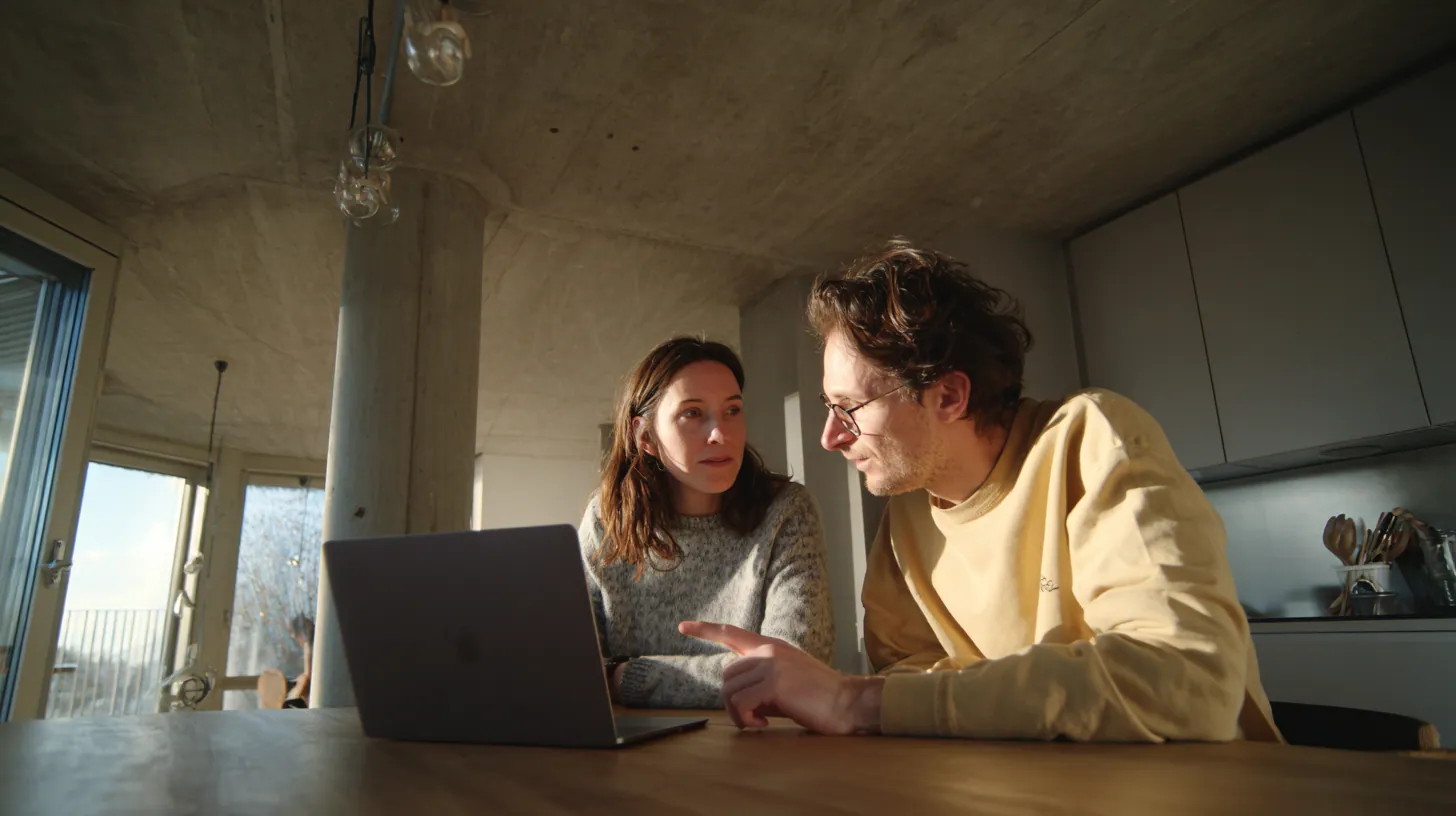
Switzerland's Biggest Daycare Is Grandma and Grandpa
38.7% of all Swiss households with children aged 0 to 12 have their children cared for by grandparents too, more than any other single informal care form. The share has risen 4.6 percentage points since 2018. In Solothurn, Lucerne and Jura, more than one family in two now relies (also) on grandparent care, a statistical three-way tie at the top. A deep dive with canton-level data and the question of what happens when grandparents cannot cover it all.
Executive Summary
Measured by reach, grandparents are Switzerland's largest informal care form. In 2023, 38.7% of households with children aged 0 to 12 had their children cared for (also) by grandparents (BFS, survey on complementary childcare, EFG). That is more than any other single informal form: more than day-care families (9.5%) and more than nannies, au pairs or babysitters (6.7%). Since 2018 the share has risen by 4.6 percentage points (from 34.2% to 38.7%). The BFS explicitly notes: due to a methodology change, the figures are only conditionally comparable to 2018, yet the confidence intervals of both years do not overlap.
Between cantons the spread is wide, and at the top it is closer than a simple ranking suggests. Solothurn (53.2%), Lucerne (53.0%) and Jura (52.3%) are statistically tied given overlapping confidence intervals: a three-way tie, not a single winner. Among reliably published cantons, the lowest is Geneva at 28.3%. Basel-City (20.9%) and Zug (26.0%) appear lower still, but the BFS flags them as unreliable due to a too-small sample, and they are shown here rather than omitted. For 8 of the 26 cantons no cantonal estimate exists at all.
Families increasingly combine care forms instead of choosing one: the share of households using institutional AND non-institutional care at the same time grew from 17.1% to 22.7% (+5.6 percentage points since 2018), the fastest-growing of the four mutually exclusive care patterns. And when daycare and school are not enough, it is almost always grandparents who step in, by far the largest informal pillar of all. But what happens when grandparents no longer can, or do not live nearby, and a family arranges additional, paid care in the household? That employment must be registered, whether occasional or ongoing. This study is non-partisan, scientifically grounded, and transparent in its methodology and sources.
The record: 38.7%, up 4.6 percentage points since 2018
No informal care pattern is as widespread as grandparent care. And no care form has grown as much, in absolute percentage points, since 2018 as institutional care (daycare and after-school care). Both trends run in parallel: more daycare and school, but also more grandparents.
Share of households with children 0–12 using each care form (multiple answers possible, categories are not mutually exclusive). “Daycare / after-school care” is the narrow BFS category “Kindertagesstätte, schulergänzende Betreuungseinrichtung(en)”. BFS note: due to a methodology change, the 2023 figures are only conditionally comparable to 2018. Source: BFS, survey on complementary childcare (EFG) 2018/2023.
Day-care families and nannies, au pairs or babysitters have grown too (to 9.5% and 6.7% respectively), but remain far smaller than grandparent care. Adding the two together (an own calculation, not a BFS sum figure, since the categories are not mutually exclusive) gives 16.2%, less than half of grandparent care's reach.
The cantons: three winners, one three-way tie
Where grandparents step in most has little to do with city versus countryside alone. Solothurn, Lucerne and Jura lead the ranking, three very different cantons that are practically indistinguishable once confidence intervals are taken into account.
| # | Share 2023 | |
|---|---|---|
| 1 | Solothurn2018: 39.5 % | 53.2 % |
| 2 | Lucerne2018: 34.2 % | 53.0 % |
| 3 | Jura2018: 40.0 % | 52.3 % |
| 4 | Bern2018: 41.5 % | 46.4 % |
| 5 | Thurgau2018: 34.4 % | 43.4 % |
| 6 | Fribourg2018: 34.4 % | 42.0 % |
| 7 | Grisons2018: 32.9 % | 41.1 % |
| 8 | Basel-Country2018: 43.0 % | 40.8 % |
| 9 | St. Gallen2018: 36.8 % | 39.5 % |
| 10 | Valais2018: 41.4 % | 38.7 % |
| 11 | Neuchâtel2018: 25.2 % | 36.5 % |
| 12 | Vaud2018: 27.5 % | 36.4 % |
| 13 | Ticino2018: 39.7 % | 35.7 % |
| 14 | Aargau2018: 37.5 % | 34.4 % |
| 15 | Zurich2018: 30.0 % | 33.1 % |
| 16 | Geneva2018: 25.8 % | 28.3 % |
| 17 | Zug2018: 19.4 % · small sample, BFS parenthetical value | 26.0 % |
| 18 | Basel-City2018: 23.3 % · small sample, BFS parenthetical value | 20.9 % |


Share of households with children 0–12 using (also) grandparent care, by canton, 2023 (subline: 2018 value). Solothurn, Lucerne and Jura are statistically tied at the top, with overlapping confidence intervals of roughly ±5 to ±10 percentage points. Basel-City and Zug are flagged by the BFS as small-sample values (parenthetical format) and are therefore excluded from the “lowest value” claim; Geneva is the lowest reliably published value. 8 of 26 cantons (UR, SZ, OW, NW, GL, SH, AR, AI) have no cantonal estimate and are missing from this list. Source: BFS, survey on complementary childcare (EFG) 2018/2023.
At the bottom, Geneva at 28.3% is the lowest among reliably published cantons, barely more than half of Solothurn's value. Basel-City and Zug show even lower figures, but are flagged as unreliable due to a too-small sample and must not be cited as “the lowest canton.”
The map makes this distribution visible at a glance: Solothurn, Lucerne and Jura in the darkest band, a three-way tie, alongside the gray cantons with no cantonal estimate.
Share of households with children 0–12 using (also) grandparent care in 2023, by canton. Darker = higher share. Solothurn, Lucerne and Jura are statistically tied at the top given overlapping confidence intervals, a three-way tie, not a single winner. Gray cantons: no cantonal estimate in the EFG 2023 (UR, SZ, OW, NW, GL, SH, AR, AI). Source: BFS, survey on complementary childcare (EFG) 2023.
Four care patterns: what families actually do
The BFS survey allows for a second, mutually exclusive view: how many households use no outside care at all, only institutional care, only non-institutional care, or both at once? Four patterns that sum to 100% in both years.
| Pattern | 2018 | 2023 | Change |
|---|---|---|---|
| No outside care | 31.9 % | 25.7 % | −6.2 |
| Institutional only | 22.7 % | 24.1 % | +1.4 |
| Non-institutional only | 28.3 % | 27.5 % | −0.8 |
| Both at once | 17.1 % | 22.7 % | +5.6 |
The four patterns are mutually exclusive and sum to 100% in both years. “Institutional” here follows the broader BFS “institutionelle Betreuung” category and is NOT the same as the narrower daycare/after-school-care figure (44.4% in 2023) used in the growth chart above; both come from the same survey but measure differently scoped care types. “Both at once” grew fastest (+5.6 percentage points), faster than “institutional only” or “non-institutional only”, but slower than the narrow daycare/after-school figure itself (+7.5 percentage points). Source: BFS, survey on complementary childcare (EFG) 2018/2023.
“No outside care” is the only one of the four values to have fallen since 2018 (from 31.9% to 25.7%, minus 6.2 percentage points). “Both at once” grew the most: more and more families no longer rely on a single solution, but combine daycare, school and grandparents.
Grandparents are the largest informal pillar, by far
Comparing the four largest informal and semi-informal forms directly for 2023 makes the size gap visible.
Share of households with children 0–12 using each form, 2023 (multiple answers possible). Grandparents are more than three times as common as the next-largest informal form. Source: BFS, survey on complementary childcare (EFG) 2023.
Grandparents are more than three times as common as the next-largest informal form (other network persons, 12.0%), and more than five times as common as nannies, au pairs or babysitters. Whoever is looking for Switzerland's biggest daycare will not find it in a building.
Figures to Quote
Five press-ready sentences for newsrooms, each with a source, ready to quote directly.
“38.7% of Swiss households with children aged 0 to 12 have their children cared for (also) by grandparents in 2023.” (BFS, survey on complementary childcare, EFG 2023)
“The share has risen 4.6 percentage points since 2018, from 34.2% to 38.7%.” (BFS EFG, 2018 and 2023 waves, only conditionally comparable due to a methodology change)
“In Solothurn (53.2%), Lucerne (53.0%) and Jura (52.3%), more than one family in two now relies on grandparent care, a statistical three-way tie at the top.” (BFS EFG 2023, canton data)
“Geneva has the lowest reliably published canton value, at 28.3%.” (BFS EFG 2023, canton data, cantons with sufficient sample size)
“The share of households using institutional and non-institutional care at the same time grew from 17.1% to 22.7%, the fastest-growing of four mutually exclusive care patterns.” (BFS EFG, 2018 and 2023 waves)
What happens when grandparents are not enough
Switzerland's biggest daycare sends no invoice, signs no contract, and keeps no opening hours. That becomes a problem exactly when grandparents no longer can, live too far away, or need care themselves. Families then look for additional, paid help, and the question is no longer whether it is needed, but whether it is registered.
When grandma and grandpa can no longer step in
- •Ad hoc handover to neighbours, acquaintances or an unregistered carer, without a contract
- •Nanny paid off the books: no AHV registration, no accident insurance
- •In the event of a household accident, the family may bear the liability itself
- •The carer builds up no pension of her own and receives no payslip
Legally employed nanny or childminder (from CHF 19.90/month)
- •Written employment contract, AHV registration from the first franc
- •Accident insurance for the employed person included
- •Monthly payslip and salary certificate, done in minutes
- •For nannies, childminders or household help, in all 26 cantons
Why a payroll platform publishes this data
Clino registers domestic childcare, nannies and childminders included, in all 26 cantons: a written contract, AHV registration from the first franc with the cantonal compensation office, accident insurance, monthly payslips and a salary certificate, for CHF 19.90 a month. Switzerland's biggest daycare stays unpaid and uncounted, that is its strength. The paid addition a family arranges on top of it does not have to be.
Grandparents are Switzerland's biggest, yet most invisible daycare: no entry in any statistic of care institutions, and yet the care form most families turn to. What matters is not whether a family needs extra help, but whether the paid help it brings in is registered.
Three Surprising Findings
More families rely on grandma and grandpa than on day-care families and nannies combined
38.7% of households use (also) grandparent care, more than the sum of day-care families (9.5%) and nannies, au pairs or babysitters (6.7%) combined: 16.2%, an own calculation from the BFS individual figures, not a BFS sum figure, since the categories are not mutually exclusive. Within informal care outside of daycare and school, grandparents are by far the largest pillar.
Solothurn leads Lucerne by just 0.2 percentage points, well within the margin of error
Solothurn (53.2%) narrowly leads the canton ranking ahead of Lucerne (53.0%) and Jura (52.3%), but with confidence intervals of roughly ±9.5, ±4.7 and ±5.9 percentage points respectively, all three values overlap substantially. Statistically it is a three-way tie at the top, not a single winner.
Families increasingly choose both: daycare AND grandparents at once
The share of households using institutional and non-institutional care at the same time rose from 17.1% to 22.7% (+5.6 percentage points since 2018), the fastest-growing of the four mutually exclusive care patterns. Care is less and less an either-or decision.
Sources
- BFS: survey on complementary childcare (EFG), 2023 wave (2023) — National and canton values, households with children 0–12
- BFS: survey on complementary childcare (EFG), 2018 wave (2018) — Comparison baseline; per BFS only conditionally comparable to 2023 (methodology change)
Do you represent an organization supporting households or workers?
Become a partner→Further Resources
About Clino
Clino is a Swiss SaaS platform enabling households to legally employ domestic workers — payroll, contracts, social security, and accident insurance included. CHF 19.90/month. All 26 cantons. Founded 2025 in Zurich. clino.ch